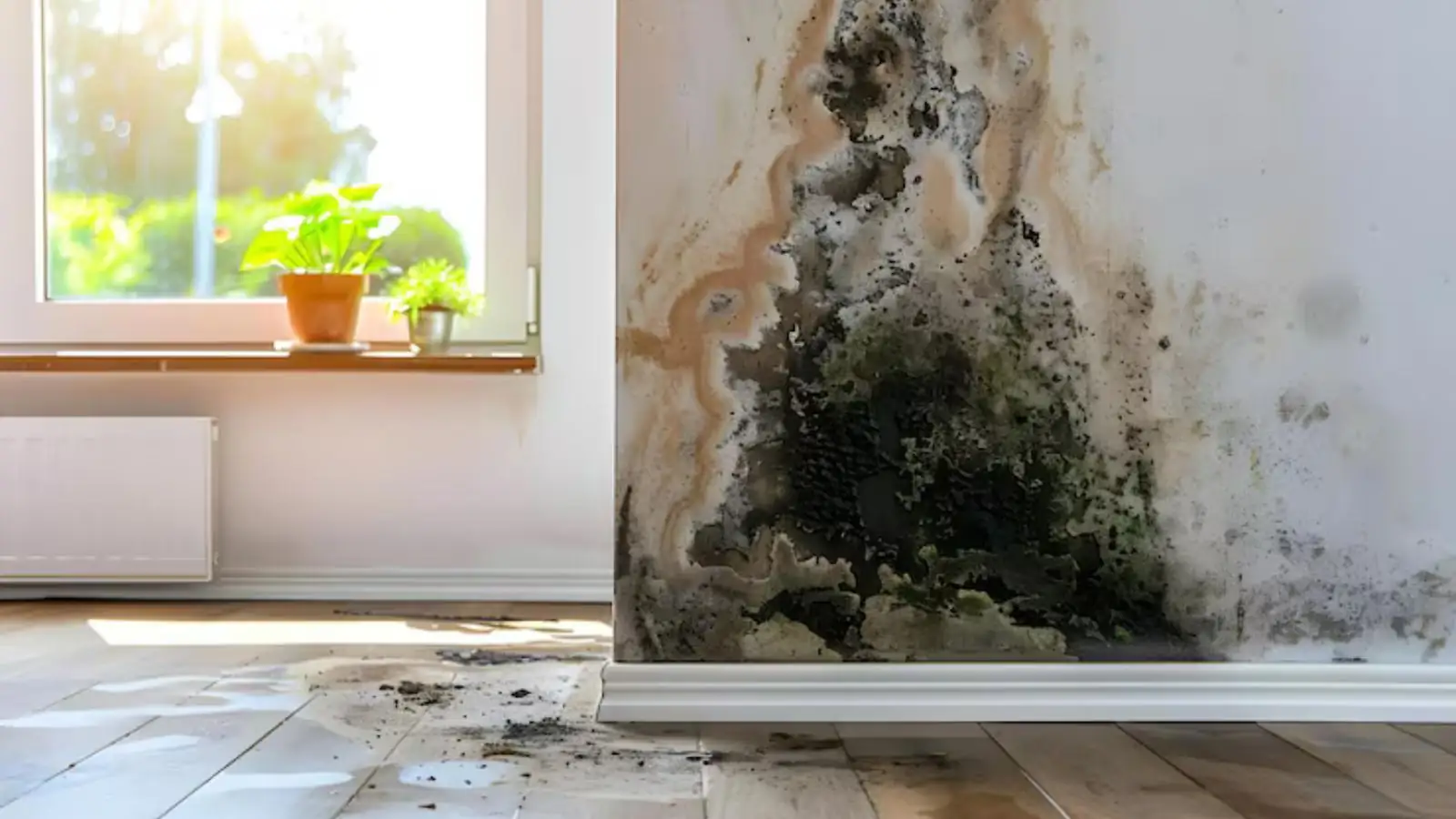
Basement mold in American Fork almost always traces back to one of six moisture sources: indoor humidity, a window well that holds water, a sump pump that stopped, spring runoff and groundwater, a leaking irrigation line or a plumbing leak. Mold needs moisture to grow, and the EPA puts it plainly: the key to mold control is moisture control. Scrubbing the stain without finding the source just resets the clock.
This guide helps you work out which source you have, what usually fixes it and which trade does the fixing. It does not cover cleanup steps. It also draws one honest line early: restoration crews dry and remove damage, but they do not waterproof a foundation.
Six common moisture sources at a glance
| Source | What you notice | Usual fix | Trade that fixes it |
|---|---|---|---|
| Humidity and condensation | Damp film on cold walls and pipes, musty air all summer | Dehumidifier, ventilation, insulating cold pipes | HVAC or the homeowner |
| Window well | Water stains under a basement window after rain | Clear debris, add a cover, fix drainage | Yard or window contractor |
| Failed sump pump | Standing water in the pit or on the floor | Replace pump, check discharge line, add backup | Plumber or drainage contractor |
| Runoff and groundwater | Dampness along one wall in spring, seepage at the floor edge | Grading, gutters, exterior or interior drainage | Excavation or waterproofing contractor |
| Irrigation leak | Wet wall near a flower bed or lawn in summer | Repair the line, adjust spray heads | Irrigation contractor |
| Plumbing leak | Stain below a bathroom or along a pipe run | Repair the pipe or fitting | Plumber |
Notice that the last column never says restoration. Our crews extract water, dry the structure and remove materials that cannot be saved, while the cause belongs to the trades named above.
Humidity and condensation
Concrete walls and floors stay cooler than the air in a finished basement during summer. When warm, humid air touches that cold surface, water condenses on it. Cold water supply pipes sweat the same way, and the drip lands on the stud wall or carpet below.
A hygrometer tells you more than guessing. Readings that stay high for weeks give mold what it needs. Running a dehumidifier, keeping the air moving and insulating cold pipes address this source without any construction.
Window wells that fill and leak
A window well is a hole in the ground next to your foundation. Leaves, mulch and soil block its drain, and rain or snowmelt then pools against the window frame and works through the seal. The stain is usually on the sill and the wall directly below.
Clear the well after each season, check that the gravel at the bottom still drains and consider a clear cover. If water keeps standing in the well, the drain connection has failed and a drainage contractor should look at it.
A sump pump that stopped working
In a home with a sump pit, the pump is the only thing standing between groundwater and the floor. Pumps fail from power loss, a stuck float switch, a clogged intake or a frozen discharge line.
Test the pump a few times a year by pouring in water and watching the cycle. A battery backup covers outages, and a plumber can check that the discharge line empties well away from the foundation. If the pit has already overflowed, the wet materials need drying within the 24 to 48 hours the EPA recommends.
Spring runoff and groundwater seepage
Groundwater rises when snow melts, and seepage shows up as a damp line at the base of a wall or water bubbling at the joint where the wall meets the slab. It repeats every spring, often in the same corner.
Start with what you can see outside: soil that slopes toward the house, downspouts that dump at the foundation and gutters packed with debris. If exterior fixes do not stop the seepage, a waterproofing contractor can evaluate exterior or interior drainage systems. We dry and repair what the water damaged, and we do not install drainage or waterproof foundations.
Irrigation lines near the foundation
Lawn and garden watering runs on a separate system, and a broken sprinkler line, a cracked valve box or a spray head aimed at the wall can soak the soil beside your basement for weeks. The dampness appears in the watering season and fades when the system is shut off.
The Utah Department of Health and Human Services says secondary irrigation water is not treated, not monitored for germs and should only be used to water yards. If that water enters the house, treat it as unclean and do not handle wet materials casually. Call a professional with experience before disturbing them.
Plumbing leaks inside the walls
A pinhole in a supply line can run for months behind finished drywall. Clues include a stain that grows after one fixture is used, a musty smell near a bathroom and a water bill that creeps up. A plumber repairs the pipe, and a restoration crew deals with the wet drywall and insulation around it.
How to track which source you have
Note the timing
Write down when the dampness appears: after rain, in spring, only in summer or all year. Timing separates runoff from irrigation from humidity.
Map the location
Mark the wall or corner on a floor plan. A single wall suggests exterior water, while damp spots along a pipe run suggest plumbing.
Measure the air
Leave a hygrometer in the basement for a week. Readings that stay high for weeks point toward condensation.
Run a water test
Turn off all water in the house and check the meter. If it still moves, a supply line is leaking somewhere.
Check outside
Walk the foundation after rain or a watering cycle. Look at grading, downspouts, window wells and sprinkler heads.
Signs that mean call someone now
- Standing water that is not draining or that returns after you remove it
- A wall that feels soft or wet to the touch
- Water that may have come from sewage, a drain backup or a yard irrigation line
- A sump pit that is overflowing
What restoration does and does not do
Be wary of anyone who promises one visit will end a basement moisture problem. Drying and mold work address the damage that has already happened, and a different trade addresses the cause. A mold remediation crew removes growth and the materials it has taken hold of, and a plumber, irrigation or drainage contractor stops the water.
When the source was a burst line or a flooded floor, flood damage restoration covers the extraction and drying. Ask any company whether its crews work to ANSI/IICRC S500 for water and S520 for mold.
Not sure where the water is coming from?
Call dispatch and describe what you see. A crew can tell you whether it sounds like a restoration job or a job for another trade.
Common questions about basement mold causes
Yes. Humid air that condenses on cold concrete walls, cold water pipes and window frames can keep a surface damp without any puddle. A hygrometer, which costs little at a hardware store, shows whether the air is staying damp.
It lowers humidity, which helps, but it does not stop liquid water coming through a wall, a window well or a floor crack. If the dehumidifier tank fills fast on a dry day, look for a source it is only masking.
Lift the lid and watch the float. Pour in a bucket of water and the pump should kick on, discharge outside and shut off. A pump that hums without moving water, runs constantly or never starts needs a plumber or drainage contractor.
No. Stopping the water prevents new growth, but existing growth and wet materials still have to be dried, cleaned or removed. Moisture control comes first and cleanup follows it.
It can. The city's pressurized irrigation system runs from about mid-April to mid-October, so a damp foundation wall that shows up only during those months points at yard watering, a leaking line or poor grading near the house.
Water still spreading or a question this page did not cover? Call (385) 988-9410