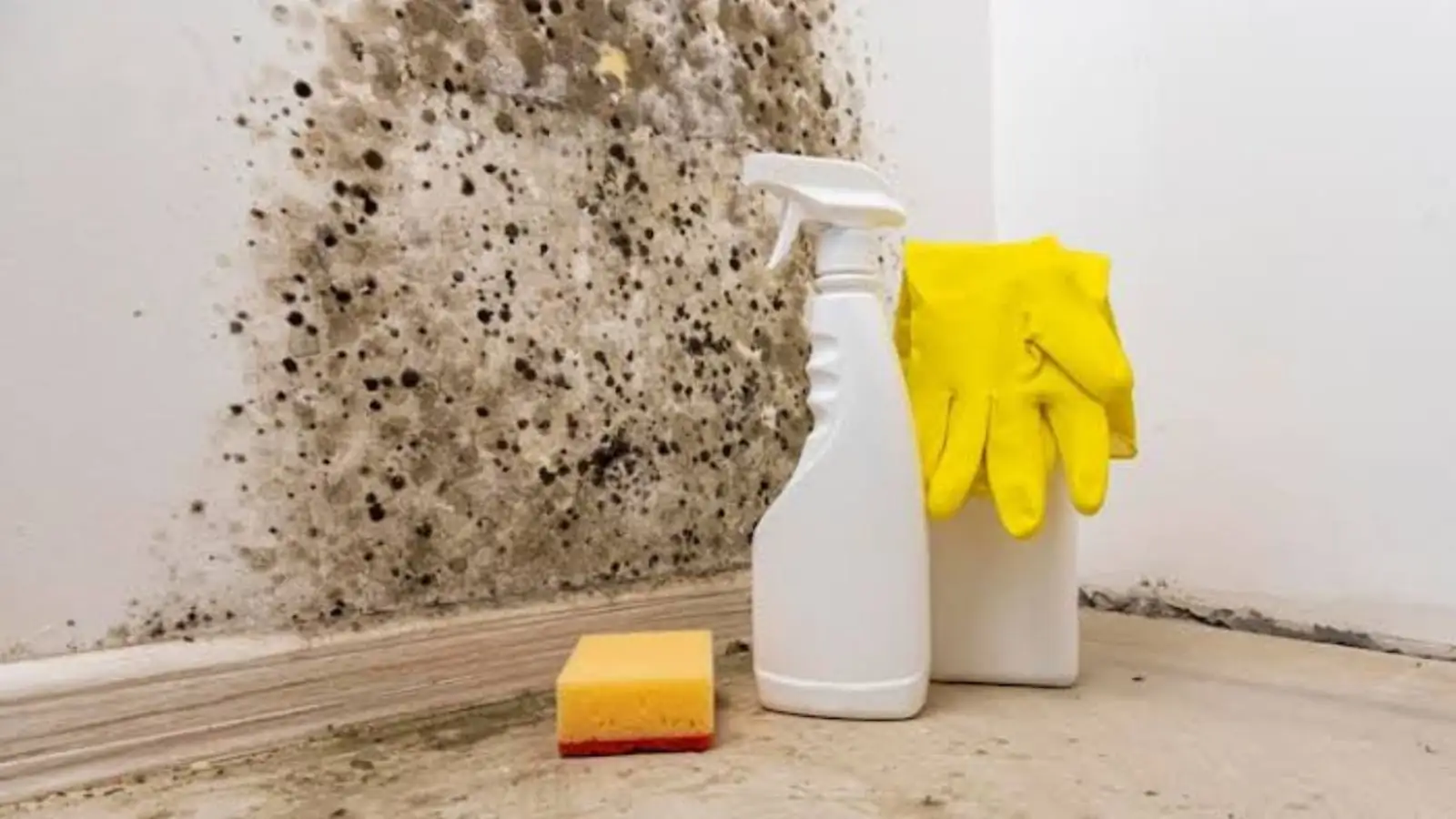
Mold on bathroom caulk, grout lines and the ceiling above the shower usually comes from steam and splashing that never fully dry. For surface growth on hard materials, the EPA says to scrub with detergent and water and dry the area completely. Absorbent or porous materials, such as a moldy ceiling tile or bath mat, may have to be thrown away, and a stain that keeps returning or grows from the inside of a wall points to a leak.
This guide stays in the bathroom. It covers which items are worth scrubbing and which to replace, how to use a ventilation fan so the room dries, and the signs that separate a surface problem from one inside the wall. For an area under about 10 square feet, the EPA notes a homeowner can often handle the cleaning.
Scrub it, replace it or open the wall
| Item | Scrub and dry | Replace | Look deeper |
|---|---|---|---|
| Tile face | Yes, with detergent and water | Cracked or loose tile | Tile that sounds hollow or moves |
| Grout | Light surface discoloration | Crumbling or sunken grout | Grout wet days after a shower |
| Caulk | Not for long | Black, peeling or cracked caulk | Gaps at the tub that stay wet |
| Fan grille and cover | Dust and film | Cracked or stained plastic | Grille that drips or has no airflow |
| Painted drywall or ceiling | Small spots on sealed paint | Soft, bubbling or flaking board | Brown ring or spreading stain |
| Shower curtain, bath mat | Wash if the fabric allows | Heavily stained or slimy items | Not applicable |
The right-hand column matters most. If any item lands there, the cause is probably more than humidity.
Caulk and grout are consumables
Silicone caulk at the tub, shower and sink lasts only so long before it cracks or pulls away. Growth on old caulk is often rooted in the material, so cleaning it gives a short reprieve. Cutting it out and replacing it, after the joint has dried fully, is the dependable repair.
Grout is cement based and porous unless sealed. Clean it with detergent and a stiff brush, let it dry and consider a sealer. If grout keeps getting wet from below, look at the tile or pan instead of re-scrubbing.
The fan grille is part of the problem
Pull the grille off a bathroom fan and you often find a mat of dust and a surface that feels damp. A clogged grille moves less air, so steam lingers in the room. Wipe it with detergent and water, let it dry and replace a stained or cracked cover.
Also check that the duct goes outside. A fan that vents into an attic only moves the moisture up to the roof deck, where it condenses on cold wood. If you see a flex duct lying loose in the attic or a fan that barely pulls a tissue to the grille, call an HVAC or general contractor to correct the vent.
Fan habits that keep the room dry
A simple ventilation routine
- Turn the fan on before the shower starts, not after.
- Leave it running until the mirror clears and the room feels dry, often 20 minutes or longer.
- Keep the door open after bathing so air can circulate.
- Squeegee glass and wipe tile walls when you finish.
- Hang towels so they dry flat, and do not leave wet mats on the floor.
- Clean the grille every few months.
A timer switch or humidity-sensing fan makes this automatic, which matters because the habit fails on busy mornings. Hygrometers are cheap, and a reading that stays high for hours after a shower tells you the fan is undersized, blocked or not venting outside.
Mold on the surface or mold in the wall
Surface growth wipes off and stays gone for a while when the room is dry. Growth that returns within weeks, or that appears on walls that never see splashing, is coming from moisture inside the wall. The EPA's guidance is blunt on the point: the key to mold control is moisture control.
Press the spot
A firm, dry wall is usually a surface issue. A soft or spongy area means the board is wet.
Look for a pattern
A ring that spreads in the same place after each shower points at a leak, not at steam.
Smell it
A musty odor with no visible growth can mean mold behind the wall or tile.
Check the other side
Look in the closet, hall or room behind the shower wall, or in the room below for a ceiling stain.
Dry-test it
Run the fan, wipe the area dry and see if it is wet again in a day with no one using the shower.
When a ceiling or corner by the shower means a leak
Steam condenses mostly on the ceiling and upper walls, so some spotting there is normal. A discolored corner low on the wall beside the tub, or a stain on the ceiling of the room under a bathroom, is different. Those spots follow the path of water, and the usual suspects are a failing shower valve, a cracked drain, a deteriorated shower pan or grout that no longer sheds water.
A plumber finds and repairs the leak. After that, a crew can dry the wall cavity and decide what must come out. We handle the damage the water left behind through water damage repair, and we do not do plumbing or fix the fixture itself.
What we do and do not do in a bathroom
We dry wet drywall, subfloor and framing, remove materials that cannot be saved and rebuild the surfaces afterward.
We do not replace shower valves, repair drain lines or retile a shower as a plumbing or tile trade. If those need work, we coordinate around the plumber.
When growth has spread beyond a small patch or has reached the wall cavity, mold remediation means containing the area, removing affected materials and cleaning the rest. No one can promise mold will never return, because new moisture brings it back.
Stain you cannot explain?
Call dispatch and describe the spot. A crew can tell you whether it sounds like surface mold or a wet wall.
Common questions about bathroom mold
Run it until the mirror clears and the room no longer feels damp, which for most bathrooms means 20 minutes or longer. A timer switch makes the habit automatic.
A window helps in warm weather but moves air weakly and does nothing in a cold snap. An exhaust fan vented outside removes the moisture directly, so use it even with the window open.
Caulk is porous over time, and growth can sit below the surface where scrubbing does not reach. Once it stays discolored after cleaning, cut it out, let the joint dry completely and apply new caulk.
Not until you know why it is stained. If the ceiling is soft, bubbling or ringed with brown, water is likely coming from above, and paint only hides it. Fix the source, dry the area and then repaint.
The city's Building Department enforces the building code and inspects construction, but its public page does not say which repairs need a permit. Ask the department before you open walls or change plumbing.
Water still spreading or a question this page did not cover? Call (385) 988-9410