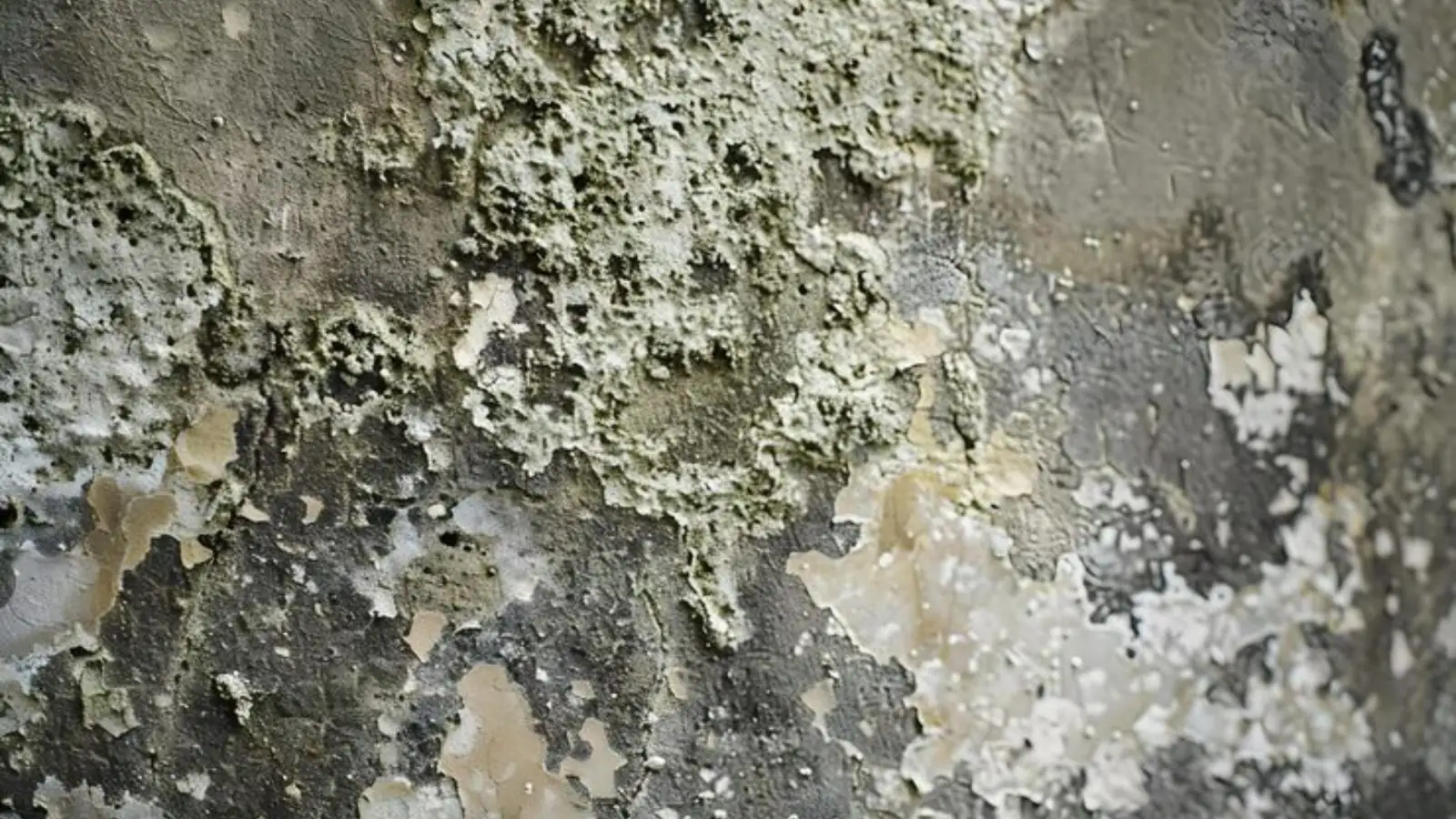
Black mold is a popular name, not a diagnosis. Dark spots on a wall, ceiling or grout line can come from many kinds of mold, and no one can name the type by looking at the color. What matters for the house is the same in every case: find the moisture, dry the area and remove the growth and the materials it has damaged.
This article answers the questions we hear most. It does not make health claims and does not diagnose anything. Questions about symptoms or exposure belong to a physician, and you should take them there first if you are worried.
What people mean when they say black mold
The phrase usually describes any dark green, gray or black growth. A homeowner finds it near a shower, under a sink or on a basement wall and wants to know whether it is a special type. Color is not evidence of that, and neither is texture, smell or how fast it spread.
Treating color as a verdict leads people either to panic over dark stains or to shrug off pale growth. Both reactions miss the real issue, which is moisture.
What the EPA says about testing
The EPA says that if visible mold is present, sampling is usually unnecessary. You already know it is there, and the next step is the same either way. A test can cost time and money without changing the plan.
The EPA also says there are no federal limits for mold in buildings. A lab report with spore counts has nothing federal to be compared against, so a number alone cannot tell you a space is acceptable or not. That is why careful companies lead with the source of moisture and the extent of damage.
| Your question | Who can answer it | What to bring |
|---|---|---|
| What kind of mold is this? | A lab, if sampling is justified | A clear reason the result will change the work |
| Is this affecting my health? | A physician | A list of symptoms and where you spend time |
| Where is the water coming from? | A plumber, roofer or drainage contractor | Photos, dates and a map of stains |
| How far has it spread? | A mold remediation crew with a moisture meter | Access to the room and the wall behind it |
| Is the house old enough for asbestos or lead concerns? | A testing professional before demolition | Year built and what will be cut |
| What does my insurance say? | Your insurer or agent | Your policy and a written loss description |
Health questions belong to a physician
We are a restoration company, and we will not tell you what mold does or does not do to a person. People differ, and only a physician can look at a specific case. If someone in the house has concerns, schedule that appointment now, separately from the building work.
A crew can answer questions about the structure: how wet it is, what it is made of, what has to come out and what steps keep dust from spreading to other rooms during the work. Ask for those answers in writing.
What to do about the building
Stop the water
A pipe, a roof edge, a window well or condensation is feeding the growth. Without a fix, anything you remove will be replaced by new growth.
Dry it fast
The EPA says to dry water-damaged areas and items within 24 to 48 hours to prevent mold growth.
Remove what cannot dry
Items wet for more than 24 to 48 hours that cannot be dried should be discarded, and porous materials such as ceiling tiles and carpet may have to go if moldy.
Clean hard surfaces
Scrub mold off hard surfaces with detergent and water and dry them completely.
Keep records
Take photos before and after and save receipts in case your insurer asks.
The EPA notes that areas smaller than about 10 square feet can often be cleaned by the homeowner. Larger areas, growth inside walls or anything that followed sewage or contaminated water is a job for a professional. For sewage or contaminated water, the EPA says to call a professional with experience.
When to hire a professional
Signs it is time to call
- Growth covers more than about 10 square feet or keeps returning after cleaning
- The wall or ceiling is soft, bubbling or stained from the inside
- The moisture came from sewage, a drain backup or another contaminated source
- A musty smell lingers with no visible source
- The house was built before 1978 and demolition is needed
- You cannot find or reach the moisture source
A mold remediation crew scopes the job with a moisture meter, contains the work area, removes affected materials and cleans what remains. Ask whether its crews work to ANSI/IICRC S520, the industry standard for mold remediation, fourth edition, 2024, and for ANSI/IICRC S500 on the water side. We do not claim certification, and you should ask any company to say plainly what it holds.
When mold followed a flood or a pipe break, the drying stage comes first, and water damage cleanup is the service that gets the structure dry enough for mold work to be finished. No one can promise mold will never return, because new moisture brings it back.
Dark patch on the wall?
Call dispatch and a crew can explain what the job would involve and what the source of water might be.
Common questions about black mold
No. Color, texture and location do not identify a species, and mold of many types can look dark. Treat any visible growth the same way: find the moisture, dry the area and remove the growth and damaged materials.
The EPA says that if visible mold is present, sampling is usually unnecessary. A kit does not tell you where the water is coming from or how to fix it, and there are no federal limits to compare a result against.
A physician. A restoration company can talk about the building, but it cannot diagnose or advise on health, and this article does not either.
Not always. Many jobs are scoped by finding visible growth and the moisture behind it. If someone recommends testing, ask what question the test answers and how the result changes the work.
Ask the contractor how suspect materials are tested before demolition. The EPA says contractors in homes built before 1978 must use lead-safe practices on emergency renovations, and the Utah DEQ says asbestos-containing materials are still found in many older homes.
The color alone does not make it one. Active water is the urgent part, because ongoing moisture feeds growth. Stop the water, start drying within the 24 to 48 hours the EPA recommends and then decide who needs to remove what.
Water still spreading or a question this page did not cover? Call (385) 988-9410