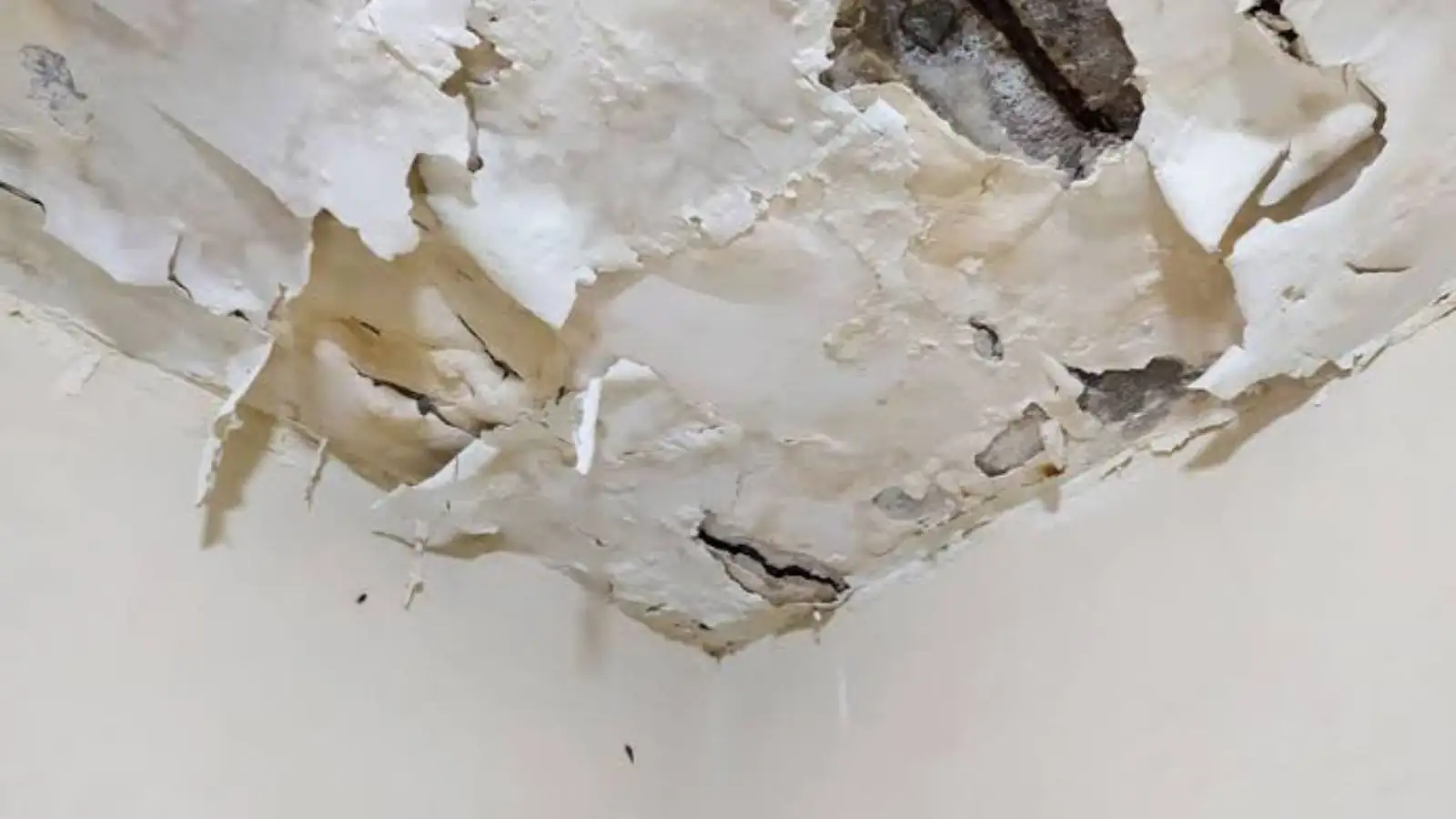
Ceiling water damage shows up as a stain, a ring, paint that bubbles or peels, a soft or sagging patch, or a drip. A tan or brown ring with a darker edge, a damp feel or a fresh drip means the leak is likely active. A dry, faded stain with a hard edge that does not change after rain or after plumbing is used is often old.
The point of this guide is diagnosis: what each sign means, how to tell a past leak from a current one, where the water usually comes from and what to do in the first hour. Repair steps are covered separately and only pointed to here.
Read the sign first
| Sign | What it usually means | Urgency |
|---|---|---|
| Tan or brown stain with a soft edge | Water has passed through, possibly recently | Check within the day |
| Ring with a darker outer edge | Several wet and dry cycles, or an active leak | Check within the day |
| Bubbling or peeling paint | Moisture trapped behind the paint | Check soon |
| Soft, spongy drywall | Drywall has absorbed water | Act now |
| Sagging or bulging section | Water or wet insulation is pooling above | Emergency, stay clear |
| Active drip | Water is flowing right now | Emergency |
| Musty smell with no visible stain | Moisture in the cavity above | Investigate soon |
A single sign tells you less than two together. A brown ring that is also soft, or a faint stain that feels cool and damp, points to moisture that is still moving.
Old stain or active leak
- Touch it: active moisture feels cool and slightly damp. Dry stains feel like the rest of the ceiling.
- Mark it: trace the edge in pencil and date it. If the stain grows past the line in a day or two, the leak is active.
- Compare: check after a rain, after showers and after the air conditioner has run for several hours. The trigger is often the cause.
- Look for layers: several rings with different shades mean the ceiling has been wet more than once.
- Use a meter: a moisture meter reads wet drywall in seconds. A dry reading under an old-looking stain is a good sign.
An old stain can still matter. Drywall that was wet for a long time may be weak, and the EPA says absorbent materials such as ceiling tiles may need to be thrown away if moldy. Do not assume a dry ceiling is a sound one if it ever stayed wet for days.
Where the water comes from
Roof
Stains that appear after rain or snowmelt, often near an exterior wall, a vent or a chimney, point to the roof or flashing.
Attic
Condensation and wet insulation can stain a ceiling even when the roof is intact, especially in cold weather.
Supply or drain plumbing
A stain under a bathroom, kitchen or laundry, or one that grows when fixtures are used, points to a pipe or fixture.
AC condensate line
A drip that tracks with the cooling cycle often comes from a clogged or damaged condensate line or overflowing pan.
Water heater or other equipment
Stains near a closet, attic furnace or water heater location suggest a leaking tank or connection.
Look in the attic if you can do it safely, from a stable path, with a flashlight and without stepping between joists. Wet insulation, a stained rafter or a dripping pipe is often visible. Do not go into an attic during a storm or if the ceiling below is sagging.
Timing gives clues too. A stain that shows up within minutes of a shower or a flushed toilet is plumbing. One that appears after a storm and fades in dry weather is the roof. A stain that comes and goes with summer heat and the cooling cycle is usually the condensate line. Write the timing down, because a crew or a roofer can use it.
A few habits make diagnosis harder. Painting over a stain hides the evidence and can seal moisture in. Drilling or cutting without a plan can spill water and knock insulation loose. Leaving a wet ceiling alone for a week lets drywall soften and gives mold the damp surface the EPA warns about.
If the ceiling sags or bulges
Safety first
A bulge or sag means water or soaked insulation is sitting on the drywall. It can release suddenly, and wet drywall is heavy. Keep people and pets out of the room, move valuables away if you can do it without standing under the area and shut off power to that part of the house if water is near fixtures or outlets and you can reach the panel dry.
Call a crew. Releasing the water in a controlled way is part of emergency water removal, and it keeps a small problem from becoming a ceiling on the floor.
Your first hour
Do these in order
- Stop the source if you can: close a fixture valve, shut the main or turn off the AC
- Clear the area under the stain and place a bucket or tarp if water is dripping
- Photograph the ceiling, the room and anything wet, then date the photos
- Mark the edge of the stain in pencil so you can see if it grows
- Call your insurer: the Utah Insurance Department says to call as soon as possible and to take temporary steps to prevent further damage
- Keep receipts for anything you buy to limit the damage
- Call dispatch for a crew if the ceiling is soft, sagging or still wet
The Utah Insurance Department also advises not having permanent repairs made until the insurer has inspected the property. The EPA says to dry water-damaged areas within 24 to 48 hours to prevent mold growth, so do not wait for an adjuster before starting to dry. When the ceiling is dry and the source is fixed, water damage repair rebuilds it.
Ceiling wet right now?
Call dispatch and describe what you see. A licensed and insured crew can help you decide what to do first.
Questions about ceiling damage
No. A ring can be a record of a leak that stopped months ago. Press it lightly, look for a damp feel or a fresh, darker edge, and check again after rain, after a shower or after the air conditioner has run for a few hours.
The air conditioner's condensate drain line may be clogged or cracked, or the drain pan may be overflowing. Water then collects in the attic or ceiling space and shows up below. Turn the system off until the line is checked.
Yes. Water runs along rafters, pipes and the top of the drywall before it finds a low spot or a seam. The stain marks where the water came down, not always where it started.
Only if there is no other choice and you can stand to the side with a bucket. A bulge can hold a large amount of water and drop without warning, so calling a crew is the safer step.
The city's emergency page says AF Notify alerts, sent through Utah County, cover flooding, road closures and water main breaks. A main break does not usually stain a ceiling, but the alert helps you rule out a city-side problem when water appears elsewhere in the house.
Water still spreading or a question this page did not cover? Call (385) 988-9410