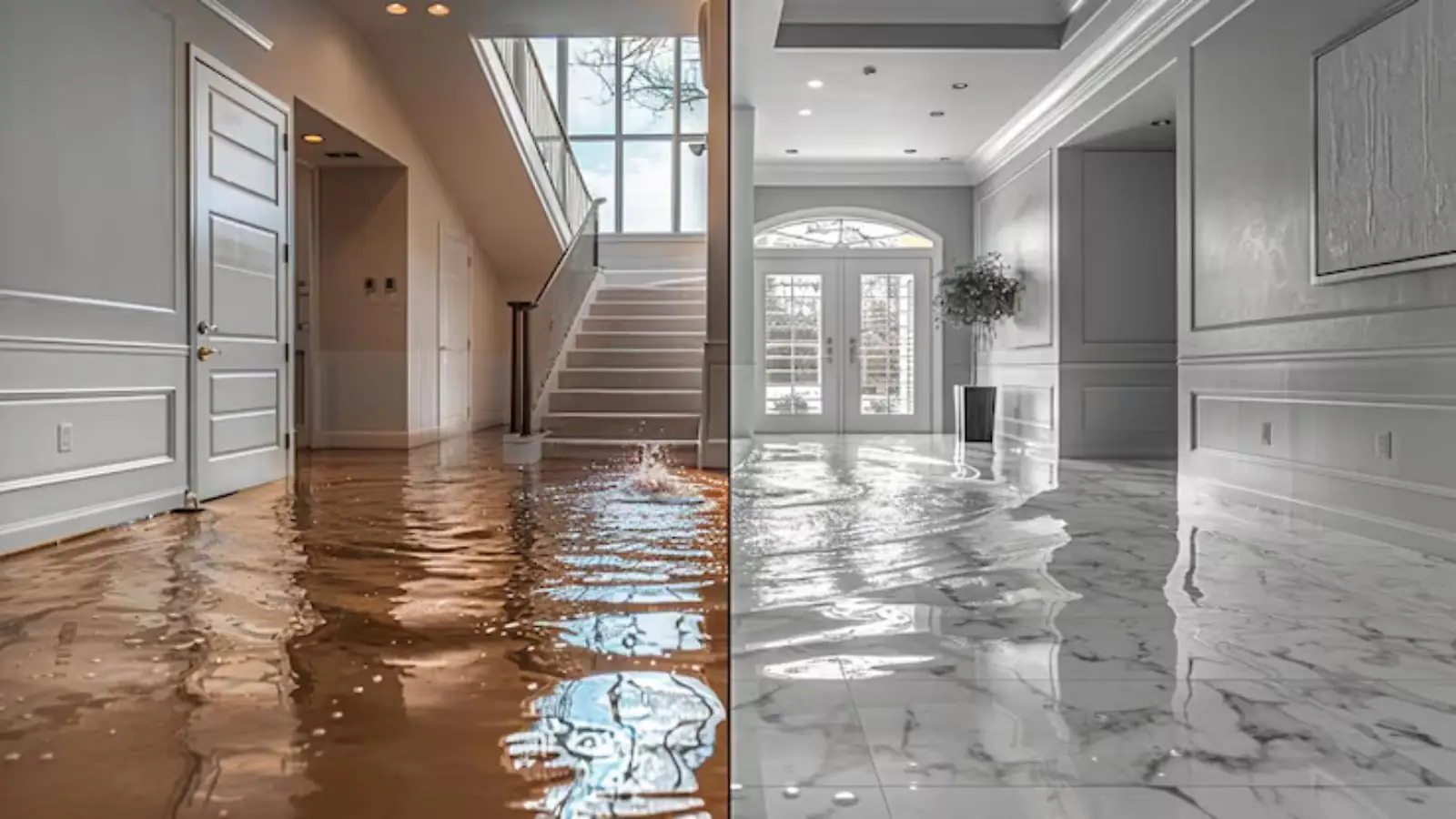
Condo insurance may cover water damage, but which policy pays depends on where the water started and which parts of the building each policy covers. In most condos and townhomes, the association's policy covers the building's shared structure and your own policy covers the parts you are responsible for, such as interior finishes and your belongings. A sudden, accidental leak is often covered. A slow leak that went unnoticed often is not.
Because every association writes its own rules, there is no single answer. This guide explains how the two layers fit together, what to do in the first hours and which questions to put to the association and your insurer.
Two policies, two layers of responsibility
The Utah Insurance Department tells condo and townhome owners to know the coverage they need for the part of the building they are responsible for. It also says you are responsible for understanding how your own policy fits with the association's policy and its governing documents, often called the CC&Rs.
Those documents decide where your responsibility starts. In one building, the association may insure everything from the drywall out. In another, you may be responsible for walls, flooring, cabinets and fixtures inside the unit. Read the section on insurance and maintenance before you ever have a leak.
The deductible trap on small losses
The Utah Insurance Department warns that the association's policy deductible might be higher than your loss, so a small loss may not be paid by the association's policy. A wet carpet and a stained ceiling can fall well under that line. When it does, the repair bill moves to whoever the documents or the facts of the leak point to.
That is why a quick call to the association manager matters on day one. Ask what the master policy deductible is and how the association has handled small losses before. The answer tells you whether to plan on using your own coverage from the start.
| Scenario | Often looked at first | Questions to ask |
|---|---|---|
| Burst pipe inside your own unit | Your policy | Is the pipe your responsibility or the association's? |
| Leak from the unit above | Neighbor's liability coverage and the association | Who owned the failed part, and was it maintained? |
| Roof or shared wall leak | Association's master policy | Does damage exceed the deductible? |
| Shared water line or riser | Association's master policy | Where does the common element end? |
| Slow leak behind a wall | Often a coverage dispute | Was it sudden or gradual under the policy language? |
| Sewer or drain backup | Often excluded unless added | Is there a backup endorsement? |
Treat the table as a starting map, not a ruling. Insurers look at the cause, the timing and the exact policy wording, and they decide claims, not drying companies.
What to do in the first hours
Stop the water if you can
Close the shutoff valve for the fixture or the unit. If you cannot find it, call the association manager or maintenance line.
Call your insurer or agent
The Utah Insurance Department advises calling as soon as possible, so start the claim before the cleanup is finished.
Notify the association in writing
Send an email or letter so there is a dated record, and keep a copy.
Photograph and video everything
Capture the source, the wet areas, damaged belongings and any stains on ceilings or walls before anything is moved.
Dry the unit and keep receipts
The department advises taking temporary steps to prevent further damage and keeping receipts. Hold off on permanent repairs until the insurer has inspected.
Why drying cannot wait for the claim
The EPA says to dry water-damaged areas and items within 24 to 48 hours to prevent mold growth, and to discard what has been wet longer and cannot be dried. A claim decision can take longer than that, so waiting for approval can turn a dry-out into a mold problem.
In an attached building, water also travels. It can run down through a wall cavity into the unit below, or sideways to a shared wall. Our water damage cleanup crews remove standing water, set drying equipment and document readings, which gives your insurer a record to work from.
Water in your condo right now?
Call dispatch. A crew can start drying and photograph the damage while you contact your insurer and the association.
Documents worth gathering
Keep these in one folder
- Your policy declarations page and the full policy
- The association's insurance certificate and the governing documents
- Dated photos and video of the damage and the source
- Written notices to and from the association and your insurer
- Moisture readings and the drying log from the crew
- Receipts for emergency steps, hotel stays and replaced items
- A list of damaged belongings with age and approximate value
Questions for the association and your insurer
Ask the association: what does the master policy cover inside units, what is its deductible and who maintains the pipe, roof or riser that failed. Ask for the answers in writing and ask how the association wants losses reported.
Ask your insurer: does the policy treat this as sudden and accidental, what is the deductible, what does it cover for loss of use if you must move out and what documentation does it want. In general terms, sudden and accidental water damage is often covered, gradual leaks often are not and flood is usually excluded, but your policy governs. Ask your insurer before you assume.
What we do and do not do
Our role in a condo claim
We dry, clean and document. Our crews are licensed and insured, and we can provide readings, photos and a written scope that you can pass to your insurer or association.
We do not decide coverage, we do not negotiate with your insurer for you and we do not promise a claim outcome. When structure has to be rebuilt after drying, our water damage repair crews can discuss the scope with you once the insurer has inspected.
Common questions about condo coverage
It depends on where the water started, what your governing documents say and how both policies are written. Often the association covers shared building parts and your own policy covers what you own inside the unit, and the neighbor's liability coverage can come into play. Ask your insurer and the association to explain in writing.
Yes, and you should. Insurers expect you to take temporary steps to prevent further damage. Keep receipts and photos, and do not authorize permanent repairs until your insurer has inspected.
Then the association's policy may pay nothing, and the cost can fall back on you or on the owner responsible for the leak. This is one reason owners keep their own coverage current and read the governing documents.
Policies differ, so read yours. Many cover personal property and some interior improvements, but limits and exclusions vary. Ask your agent which parts of the unit count as yours and which belong to the association.
Ask for the reasons in writing and review your policy language. The Utah Insurance Department takes complaints online, and the process usually takes three to four weeks. The department cannot settle disputes the way a court can.
Water still spreading or a question this page did not cover? Call (385) 988-9410