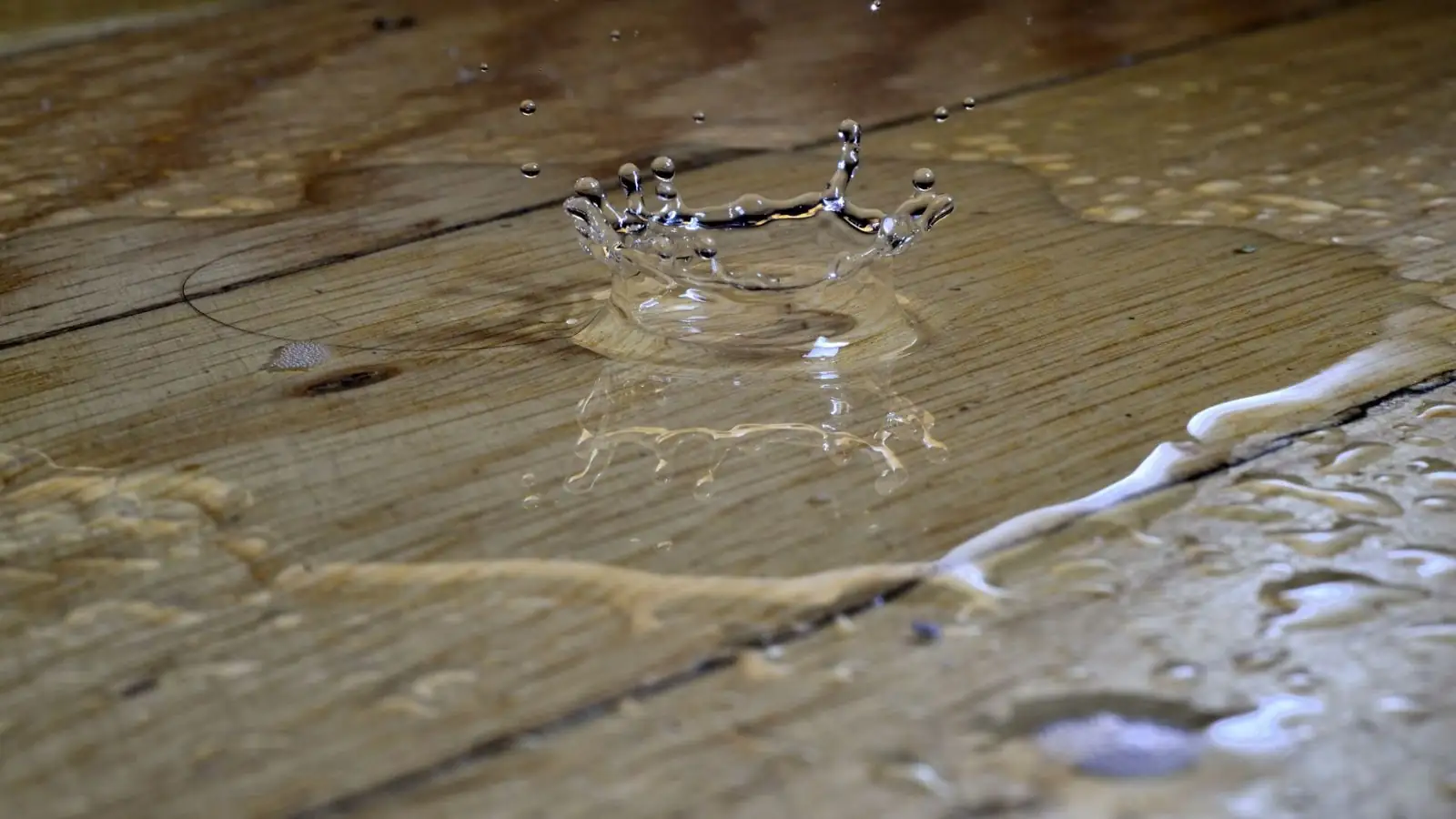
Water damaged wood can often be saved if it is dried slowly and the water source is stopped quickly. Solid wood furniture and hardwood flooring usually recover from a short soaking, while particleboard, swollen veneer and wood that has stayed wet for days often cannot. The deciding factors are how long the wood stayed wet, how clean the water was and whether mold has started.
This guide covers floors, furniture and the structure behind them. It explains what the warped shapes mean, what a homeowner can do in the first day and where drying turns into a repair job for a crew.
The first 48 hours decide most outcomes
The EPA says to dry water-damaged areas and items within 24 to 48 hours to prevent mold growth, and to discard anything that stayed wet longer and cannot be dried. Wood sits between those two categories. Solid lumber can be dried, but it takes longer than fabric and it hides moisture deep in the grain.
Start by stopping the source. Lift furniture off wet floors, set the legs on foil or plastic blocks and open windows if the weather allows. Wipe standing water, then let a crew measure what is left, because the surface of a board can feel dry while the core is not.
Reading hardwood floors: cupping, crowning and buckling
Wood absorbs water through its underside and edges first, so the shape of the damage tells you where the moisture sits. Three words come up in most inspections.
- Cupping: board edges rise higher than the center, which usually means moisture came from below, such as a wet crawl space or subfloor.
- Crowning: the center of each board rises above the edges. It often shows up after a cupped floor was sanded before it finished drying.
- Buckling: boards lift off the subfloor, sometimes in a peak several inches high. This is the most serious stage and usually means major water exposure.
Cupping and crowning can sometimes be corrected by drying and sanding. Buckling usually means the affected boards come up and new ones go in, along with a close look at the subfloor underneath.
| What you see | Likely cause | Usual outcome |
|---|---|---|
| Slight cupping, no stains | Short exposure or humidity | Dry slowly, then refinish if needed |
| Cupping with dark seams | Water from below or trapped | Check subfloor, may need partial replacement |
| Crowning after sanding | Sanded before fully dry | Re-dry, then sand again |
| Buckled boards | Heavy or prolonged soaking | Remove and replace affected boards |
| Swollen veneer or particleboard | Any significant wetting | Replace the piece |
| Black or green spots on wood | Moisture left too long | Stop, treat as mold, call a pro |
Furniture: what to save and what to let go
Solid wood tables, dressers and chairs handle water far better than pieces made of pressed board. Look at the back and underside of a piece. If you see layered chips instead of grain, the core will swell and does not return to its old shape.
For solid pieces, move them to a dry room with gentle airflow, pull out drawers and remove hardware so air reaches every surface. Keep them out of direct sun and away from heat vents. White rings or a cloudy finish often fade once the wood dries, and a refinisher can handle what is left.
Why slow drying beats fast drying
Wood shrinks as it loses water, and it shrinks unevenly when the surface dries faster than the core. That is how boards split, joints open and finishes crack. Professional crews control airflow and humidity so the whole board gives up moisture at roughly the same rate.
A heater aimed at a wet floor dries the top layer and leaves the lower layer wet. A moisture meter, checked daily, is what says the job is finished.
Subfloor and framing behind the finish
Floors and walls can look fine while the wood behind them stays wet. Plywood and oriented strand board subfloors swell at the edges, and framing lumber can darken or turn soft where water pooled against it. Solid framing that reads dry is usually left in place. Soft, crumbling lumber is cut out and replaced.
When flooring is taken up, crews also look at what lies beneath it. The Utah Department of Environmental Quality says asbestos-containing materials are still found in many older homes, including vinyl tile and sheet rock, and that you cannot tell by looking. Materials that test positive must be removed by a certified asbestos contractor before they are disturbed, so ask about testing before any older floor is torn out.
Signs that wood needs more than drying
- Boards that feel soft or leave a dent when pressed with a screwdriver
- A sour, earthy smell that returns after the room is aired out
- Dark staining that follows the grain and does not wipe away
- Floor seams that stay raised weeks after the surface feels dry
- Fuzzy growth or black spotting on the underside of a piece
When mold shows up on wood
Mold needs moisture and an organic surface, and wood supplies the second part. The EPA says the key to mold control is moisture control, and that visible mold usually does not need to be sampled before it is dealt with. If wet wood has stayed damp past the two-day window, expect to see spotting on the underside of floorboards, the back of cabinets and the bottom of wall studs first.
On hard surfaces, the EPA says to scrub with detergent and water and dry completely, and areas under about 10 square feet can often be cleaned by the homeowner. Porous or rotted pieces, and anything larger than that, belong to a water damage repair crew that can open the area and rebuild it. Health questions about mold belong with a physician.
Not sure if your floor can be saved?
Call dispatch and describe what you see. A crew can explain whether drying, refinishing or replacement is the likely path.
Repair, refinish or replace: how to decide
A crew works from readings, not appearance. Wood that reads dry, is solid and has no mold can usually be refinished. Wood that is soft, split, buckled or colonized should be replaced. For anything in between, most contractors wait for steady readings across several days before deciding.
Ask for the scope in writing before work starts, and ask whether the crew works to the ANSI/IICRC S500 standard for water damage restoration. Our crews are licensed and insured. Our water mitigation service handles the drying stage, and repair follows once the wood is confirmed dry.
What we do and do not do
We dry wet structures, measure moisture and rebuild damaged flooring, drywall and framing. We do not repair plumbing, roofs or fire damage, so a leaking pipe or roof needs a separate trade to fix the cause.
Furniture refinishing and antique restoration are specialist work. We can tell you whether a piece is dry, but a restorer finishes it.
Common questions about wet wood
Often they do, if the source of moisture is gone and the room dries slowly and evenly. Boards can take weeks to settle, so wait for steady moisture readings before anyone sands. If the edges stay raised after the floor reads dry, sanding is the usual next step.
You cannot tell from the top. A moisture meter and sometimes a small test opening show the subfloor reading. Soft spots underfoot, a musty smell or boards that lift at the seams are signs to have it checked.
Often yes, because solid wood tolerates drying better than modern composite. Move the piece to a dry room, keep it out of direct sun and heat, and ask a furniture restorer before attempting any finish repair on your own.
Yes. A cracked fitting or a stuck valve can soak a wood sill plate or deck ledger for weeks without any visible puddle. Shut off the zone and look at the nearest valve box before blaming the roof.
Water still spreading or a question this page did not cover? Call (385) 988-9410