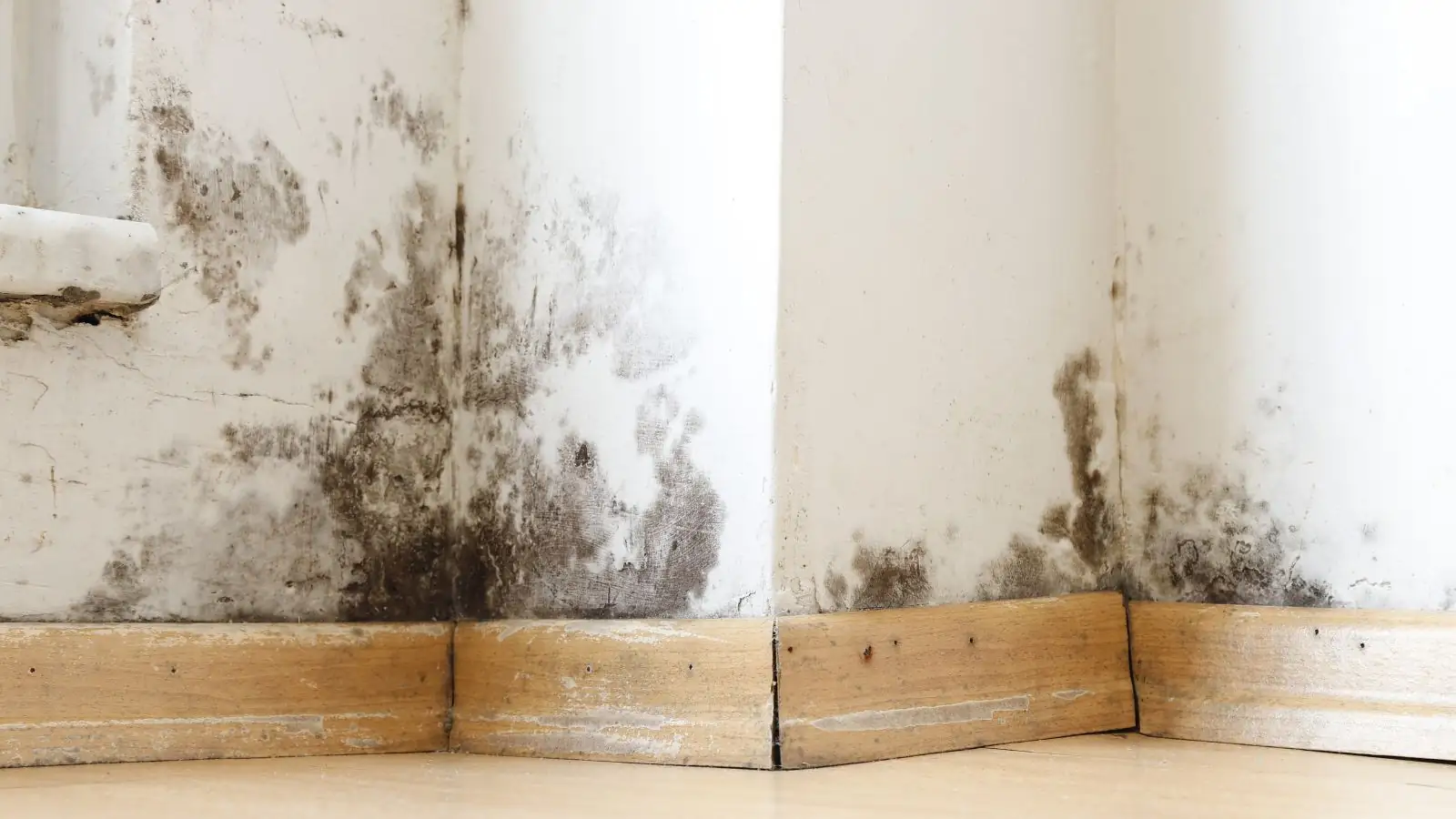
You can tell you probably have mold by looking for three things: visible fuzzy or speckled growth, a persistent musty smell and a source of moisture nearby. Growth often hides, so the more reliable method is to search for the water first. If you find damp materials, leaks or condensation, mold is a likely follow-on.
This guide gives an inspection routine you can finish in an afternoon with a flashlight. It also covers when a moisture meter is worth the money, when a lab test is not, and what to do once you know.
Visual signs to look for
Mold appears as spots, patches or fuzzy texture in colors that include black, green, white, gray and orange. It may look like a smudge at first. Wipe a small spot with a damp cloth. Dirt lifts, while growth often smears or comes back within days.
Other signs include paint that bubbles or peels, drywall that crumbles or feels soft, wallpaper that lifts at the seam and ceiling stains with a brown edge. Discoloration that follows a pipe or an outside wall is a stronger lead than one random spot.
What a musty smell tells you
A damp, earthy odor that is stronger in one room, one closet or near one wall points to moisture trapped somewhere. Smell the area with the doors closed for a few hours, then move to the spot where it intensifies. That is where to search first.
Smell alone does not prove mold, and it cannot be measured by a nose. Treat it as a pointer, then check the building materials and find the water.
Where mold hides
| Place | Why it stays damp | How to check |
|---|---|---|
| Behind furniture on exterior walls | Cold wall, little air movement | Pull the piece out 6 inches and look at the wall and baseboard |
| Closets on exterior walls | Stagnant air, clothing holds moisture | Move boxes, check corners and the lowest shelf |
| Under sinks | Slow drips at supply lines and traps | Look at the cabinet floor and the back wall with a flashlight |
| Behind shower walls | Failed grout, caulk or valve seal | Check adjacent rooms, and press tile edges for movement |
| Basement stairs | Cold concrete, damp stair stringers | Look under the stairs and at wood touching concrete |
| Attics | Bath fan ducts, roof leaks, poor ventilation | Check the underside of the roof deck near vents and fan ducts |
Check the ceiling below any bathroom, the wall behind the water heater and the area around the washing machine, as well. Any place where water, cold surfaces and still air meet is a candidate.
Using a moisture meter
A moisture meter measures how wet drywall, wood or concrete is. Pin meters read the material at the tips, and pinless meters scan a larger area without leaving holes. Take a reading on a wall you know is dry, then compare it with the suspect area.
A big gap between the two readings means water is present or was recently. Crews use meters to find the edge of a wet area, since moisture wicks above and beyond a visible stain. If you find a wet wall, drying it within 24 to 48 hours is the goal the EPA sets for preventing mold growth, and water mitigation is the service that dries the structure.
To test or not to test
The EPA says that if visible mold is present, sampling is usually unnecessary. The next steps are the same regardless of the species: stop the moisture, dry the area and remove the growth and damaged materials. The EPA also says there are no federal limits for mold in buildings, so a lab number has nothing federal to be measured against.
Testing can make sense when you have a persistent smell with no visible source, when you need documentation for a dispute or when a professional has a specific question to answer. Ask what the result will change before paying for it. Questions about symptoms belong to a physician, not a test kit.
A 20-minute home inspection
- Look for staining, fuzzy patches, bubbling paint and soft drywall
- Check under every sink with a flashlight
- Pull furniture away from exterior walls in bedrooms and the basement
- Look inside closets on outside walls
- Check the ceiling below bathrooms and under the stairs
- Peek into the attic near fan ducts and roof vents
- Note where the smell is strongest
What to do next
Find the water
A leak, condensation, roof entry or yard water is behind it. Without finding it, cleaning fails.
Stop and dry
Fix the source, run fans and a dehumidifier and keep wet items from spreading moisture.
Decide how big it is
The EPA notes that areas smaller than about 10 square feet can often be cleaned by the homeowner.
Scrub or discard
Scrub hard surfaces with detergent and water and dry completely, but porous materials such as carpet or ceiling tiles may have to be thrown away.
Call if it is large or unclear
Large areas, wall cavities or contaminated water call for a professional.
If the source was sewage or contaminated water, the EPA says to call a professional with experience before touching anything. When growth is larger than a small patch, mold remediation covers containment, removal and cleaning. No one can promise mold will never return, because the next leak or damp stretch brings it back.
Found a wet wall or fuzzy patch?
Call dispatch and describe where it is. A crew can explain how the area is measured and dried.
Common questions about spotting mold
Yes. A smell is a clue, not a requirement, and small or hidden growth may have no odor you notice. If you have had a leak and cannot find growth, check behind and under things and read the moisture level of the wall.
It shows whether a material is wet. A reading well above a dry reference spot on the same material means water is present. It does not show whether mold is growing, but it points to where to look.
Usually not. The EPA says that if visible mold is present, sampling is usually unnecessary. Spend the effort finding the moisture instead, since there are no federal limits to compare air results against.
No. Water stains, soot, dirt and mineral deposits can look similar. A stain that is wet, spreading, fuzzy or paired with a musty smell deserves a closer look, and a dry, unchanged stain may be old water damage.
Yard watering can leave soil beside the foundation saturated. In American Fork, the city's irrigation season runs from about mid-April to mid-October, so a wall that is damp only then may be taking on water from the yard side.
Water still spreading or a question this page did not cover? Call (385) 988-9410