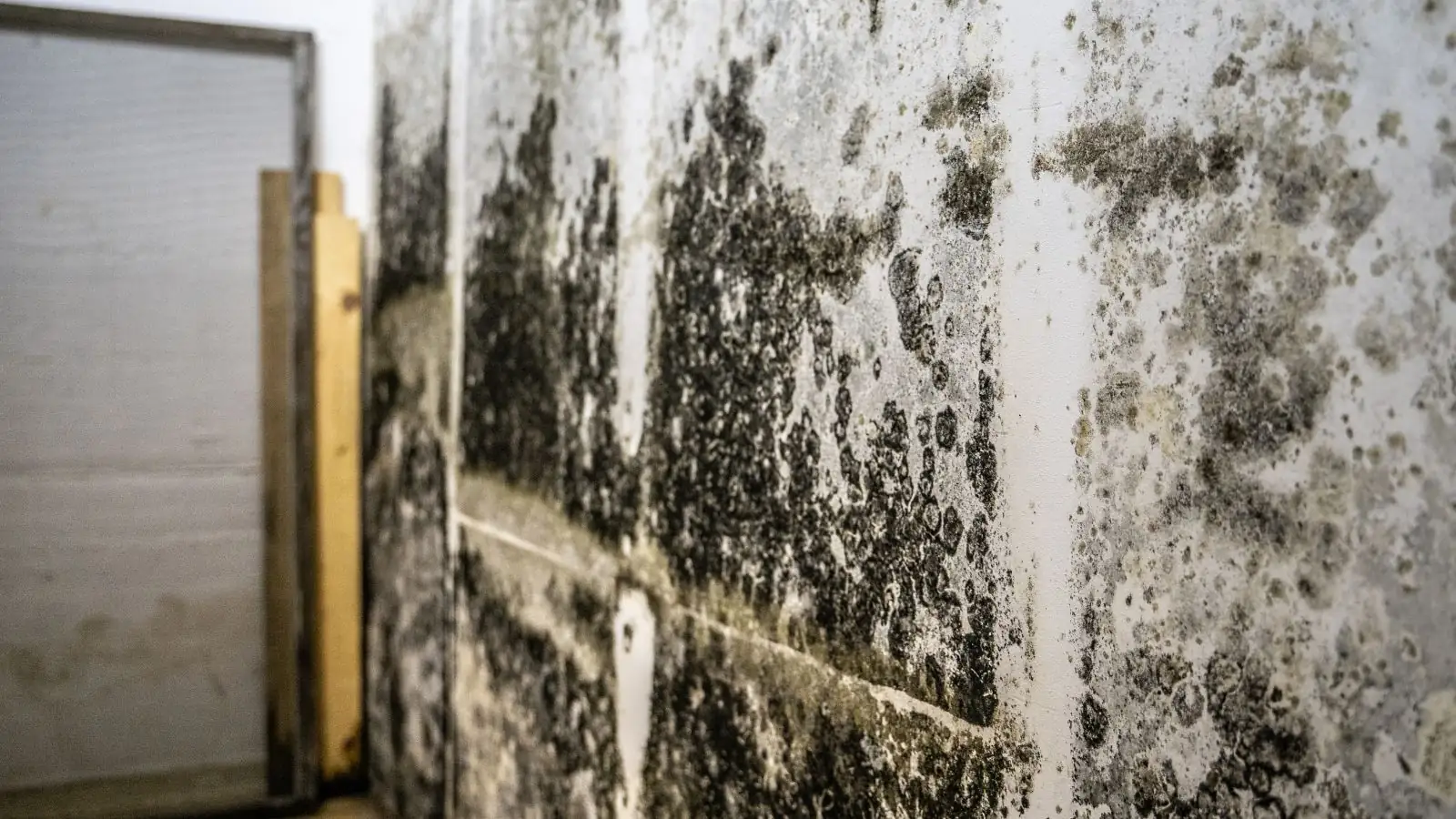
A homeowner can usually clean basement mold on hard surfaces if the growth covers less than about 10 square feet and the cause of the moisture is fixed. The EPA gives that rough size limit. Anything larger, anything on soaked drywall or carpet and any case where the water was sewage or floodwater is better handled by a crew with containment.
This guide lays out the size limit, what to clean and what to throw away, how to protect yourself, the shortcuts that fail and the signs that it is time to call for help.
Step one is the moisture, not the mold
The EPA says the key to mold control is moisture control. If you scrub a wall and the source keeps feeding it, the growth returns. No cleaning plan can promise mold stays away, but fixing the water gives your work a fair chance.
Look for the cause before you buy anything. Check for a dripping pipe, a window well that holds water, a cracked foundation wall, a laundry vent that ends in the basement, a sump pump that is not working and condensation on cold pipes. In American Fork, the American Fork River runs through the city, and the city says spring runoff peaks from April through June 1. Check basement walls and the floor drain more often during those weeks.
How big is too big
The EPA says areas of less than about 10 square feet can often be cleaned by the homeowner. That is roughly a three-foot by three-foot patch. Add up all spots in one room, because many small areas can add up to a bigger problem.
| Situation | DIY reasonable? | Why |
|---|---|---|
| Under about 10 sq ft on concrete or sealed wood | Often yes | Hard surfaces can be scrubbed and dried |
| Spotting on a plastic or metal storage shelf | Yes | Nonporous, easy to clean |
| Growth on carpet, pad or ceiling tile | No, discard | Porous materials may have to be thrown away |
| Large areas on drywall or framing | No | Too much to contain and remove safely |
| Musty odor with no visible source | Not yet | The source may be inside a wall |
| Sewage or floodwater involved | No | Call a professional with experience |
What to clean and what to throw away
The EPA says to scrub mold off hard surfaces with detergent and water and dry completely. That covers concrete, sealed wood framing, tile, metal and plastic. Wipe small sections at a time, rinse the cloth often and let the area dry with a fan and a dehumidifier.
Porous materials are different. The EPA says absorbent or porous materials such as ceiling tiles and carpet may have to be thrown away if moldy. Wet drywall and insulation fall in the same group, and the CDC advises throwing away items that cannot be disinfected, such as wall coverings, cloth, rugs and drywall, after floodwater.
Items wet for more than 24 to 48 hours that cannot be dried should be removed and discarded. Cardboard boxes, old books, upholstered furniture and stored clothing are the usual victims in a basement. Bag them before carrying them through the house.
Protective gear in plain terms
- Respirator: a close-fitting N95-style mask or better, worn the whole time you disturb growth.
- Eye protection: sealed goggles, not regular glasses.
- Gloves: long rubber or nitrile gloves that cover the wrists.
- Clothing: long sleeves and pants you can wash at once, or disposable coveralls.
- Airflow: a window fan blowing outward, with the door to the rest of the house closed.
Pick one cleaning product and never mix it with another. Some combinations release dangerous fumes. Keep the fan running and take breaks outside if you feel unwell, and ask your physician about any health question.
After the cleanup: confirm it is dry
Surfaces that look clean can still hold water. Leave the fan and dehumidifier running for several days and keep the basement door open to the rest of the house when you are done. Check the area again after a few days for a returning odor, new staining or damp spots on the floor.
If a spot returns, the moisture source is still active or the material behind it is wet. Stop scrubbing and have the wall or floor assessed. Repeated cleaning of the same patch is a sign that something deeper needs attention.
What does not work
Painting over it
The growth stays underneath and the paint often peels.
Fogging without drying
A fog leaves the wet materials and the moisture source in place.
Cleaning without fixing the leak
The surface looks clean for a while and the growth comes back.
Running a fan at the visible spot only
Mold hides behind panels and under carpet, so the whole room has to dry.
Testing first
For visible mold the EPA says sampling is usually unnecessary.
A related trap is covering a damp wall with new paneling. If the wall behind it is wet, you have sealed in the problem.
When to hire a pro
Call a crew when growth covers more than the 10 square foot rule, when it sits on wet drywall, framing or insulation, when the water was sewage, when you cannot find the source or when you would rather have the work done under containment. Containment, negative air and HEPA filtration are tools a homeowner does not have.
Ask whether the crew works to the ANSI/IICRC S520 standard for mold remediation. Our mold remediation crews are licensed and insured. Wet basements also need a drying plan, which is where water damage cleanup comes in.
Not sure how far the mold goes?
Describe what you see to dispatch and a crew can check the moisture and tell you whether the job fits a DIY scope.
What we do and do not do
We contain, remove and dry affected materials and clean what can be saved. We do not diagnose illness, and we do not promise mold will never return, since that depends on moisture control after we leave. We do not repair plumbing, so a leaking pipe needs a plumber.
Common questions about basement mold
No. Paint covers the stain and leaves the growth and the moisture in place. Mold often shows through again, and the paint can peel as the surface stays damp. Clean or remove the material first, dry it fully and fix the water source before any coating.
Usually not. The EPA says that if visible mold is present, sampling is usually unnecessary, and that there are no federal limits for mold in buildings. A test result does not change the cleanup steps for visible growth.
Fogging does not replace removal and drying. If growth is still on wet materials, a fog only treats the air and surfaces for a short time. The moisture and the contaminated material still have to be dealt with.
Dry means moisture readings on the concrete, framing and drywall match a reference reading from a part of the house that was never wet. A dehumidifier that stops collecting water is also a sign that the air has dried.
It can. The American Fork River runs through the city, and the city says runoff peaks from April through June 1. Wet seasons raise the chance of seepage, so check the basement walls and floor drain more often in spring.
Water still spreading or a question this page did not cover? Call (385) 988-9410