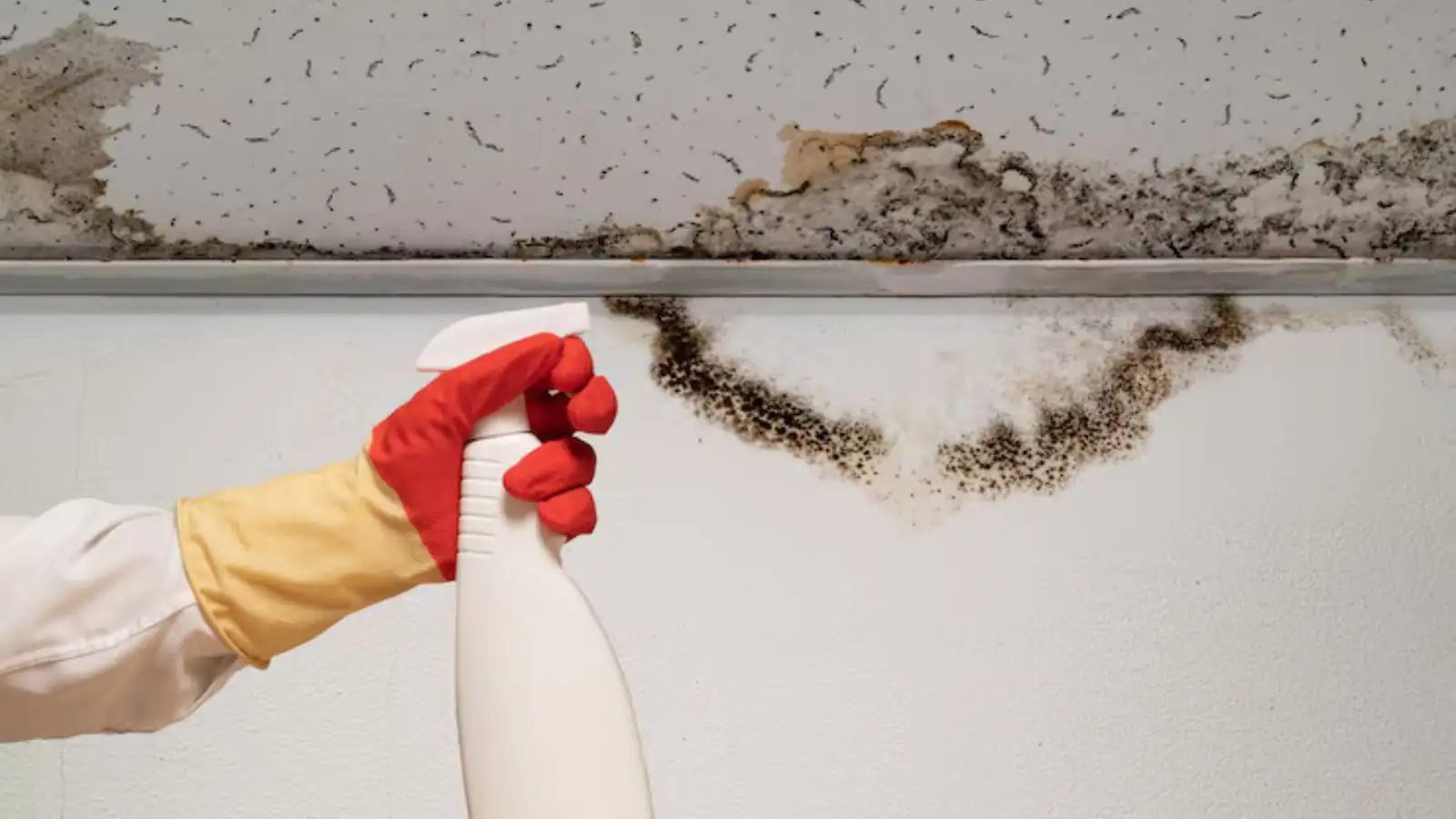
Mold on a ceiling means the ceiling has been damp, and the first job is to find where the water comes from. Small spots on painted drywall can often be cleaned if the moisture is fixed. Soft, stained or repeated growth means the drywall has to be cut out and replaced.
The EPA says the key to mold control is moisture control, and areas under about 10 square feet can often be handled by the homeowner. This guide is limited to ceilings: where the water comes from, what to do, what to avoid and when to call.
Why ceilings grow mold
Ceilings sit under roofs, attics and upstairs bathrooms, so they collect water that started somewhere else. Five sources account for most cases.
| What you see | Likely source | Where to look |
|---|---|---|
| Brown ring that grows after rain or snowmelt | Roof leak | Attic sheathing and flashing |
| Spots in a pattern across a large area, worse in winter | Attic condensation or poor ventilation | Attic insulation and vents |
| Dark patches around a bath fan or light | Fan venting into the attic | Duct end in the attic |
| Drip near an air handler or a single stain | AC condensate line | Drain line and pan |
| Stain below a bathroom, laundry or kitchen | Upstairs plumbing | Supply and drain lines, tub seals |
A single stain with a clear ring and a sharp edge points to an active leak. A broad, even darkening points to condensation. Photograph the spot with a date so you can see whether it is growing.
The attic is usually part of the story
Warm, humid indoor air rises into the attic, meets a cold roof deck and condenses. If the ventilation is poor, the sheathing and the top of the insulation stay wet through winter. That moisture can drip, or it can soak down into the ceiling drywall from above.
Bath fans are a frequent culprit. A fan that ends in the attic rather than outdoors dumps shower steam right where it condenses. The duct should run through the roof or a wall to the outside, and it should not be crushed or disconnected.
What to do right away
Stop or reduce the water
If a pipe is leaking, shut off the water to that fixture. If it is a roof leak, place a bucket and call a roofer for a temporary cover.
Protect the room
Cover furniture and floors with plastic. Keep people out from under a sagging section, since saturated drywall can fall.
Check the attic
Look for wet insulation, dark sheathing, a disconnected duct or a drip line. Use a flashlight and stay on the joists.
Dry the space
Run a dehumidifier and a fan in the room. Dry within 24 to 48 hours if you can, as the EPA advises.
Document it
Take photos and notes for your insurer, and keep receipts for emergency steps.
What a homeowner can clean
If the drywall is firm, the paint is intact and the spot is small, the EPA approach for hard surfaces is to scrub with detergent and water and dry completely. Work from a stable ladder with a respirator, goggles and gloves, and keep cleaning products from being mixed with each other.
Do not scrub heavily. Wet drywall paper tears easily, and scrubbing spreads growth and dust. If the surface crumbles, bubbles or smells strongly after drying, stop. Absorbent or porous materials, such as ceiling tiles, may have to be thrown away if moldy.
What to avoid
- Painting over the stain before the area is dry
- Using a stain-blocking primer in place of fixing the leak
- Blasting the ceiling with a pressure washer or a wet sponge
- Sanding mold, which sends dust through the house
- Mixing cleaning products or using them in a closed room
- Ignoring a sagging section directly above you
When ceiling drywall has to be cut out
Drywall comes out when it is soft, stained through, sagging or repeatedly moldy, or when the leak lasted long enough for the paper face and gypsum to stay wet. The crew cuts a clean line beyond the damage, checks the joists and insulation above and removes what cannot be dried.
Before a cut, there is a safety question. Utah's Department of Environmental Quality notes that sheet rock and vinyl tile in older houses can contain asbestos, and no one can spot it by eye. Materials that contain asbestos must be removed by a certified asbestos contractor before being disturbed, and the EPA says contractors in homes built before 1978 must use lead-safe practices on emergency renovations.
If your house is older, ask who tests the ceiling before the first cut. That one question keeps dust, and a surprise, out of the living room.
Ceiling stain that keeps returning?
Call dispatch and describe the spot. A crew can check the ceiling and attic with a moisture meter and explain what has to come down.
Hiring help for a moldy ceiling
Call a crew when the growth is larger than a small patch, when the drywall is soft, when the stain returns after cleaning or when you cannot find the source. Our mold remediation crews contain the work and remove affected drywall. Once it is dry, water damage repair puts the ceiling back.
Ask any company whether its crews work to ANSI/IICRC S520 for mold remediation. Our crews are licensed and insured. Health questions about mold belong with your physician.
What we do and do not do
We remove moldy drywall, dry the space and rebuild the ceiling. We do not repair roofs or plumbing, so a failed roof or pipe needs its own trade. We also do not promise that mold will not return, since that depends on controlling moisture afterward.
Common questions about ceiling mold
No. Color does not tell you what the growth is, and the EPA says sampling is usually unnecessary when mold is visible. Dirt, soot and stains from old leaks can look similar. Treat any damp, spreading dark patch as a moisture problem first.
On a small, dry area of painted drywall that has been fixed at the source, a detergent and water wipe is the EPA's approach for hard surfaces. If the drywall is soft, stained through or has grown back, it has to be cut out and replaced.
The moisture is still arriving. Common causes are a slow roof leak, condensation in the attic or a vent that ends in the wrong place. Cleaning the surface does not change those.
Unlikely. Outdoor watering in American Fork uses a separate pressurized irrigation system, available from about mid-April to mid-October, and it does not feed indoor pipes. A winter ceiling stain points to the roof, the attic or your indoor plumbing.
After the drywall and the attic space above read dry on a moisture meter. Patching earlier can seal moisture in. A crew can tell you when the readings match a dry reference.
Water still spreading or a question this page did not cover? Call (385) 988-9410