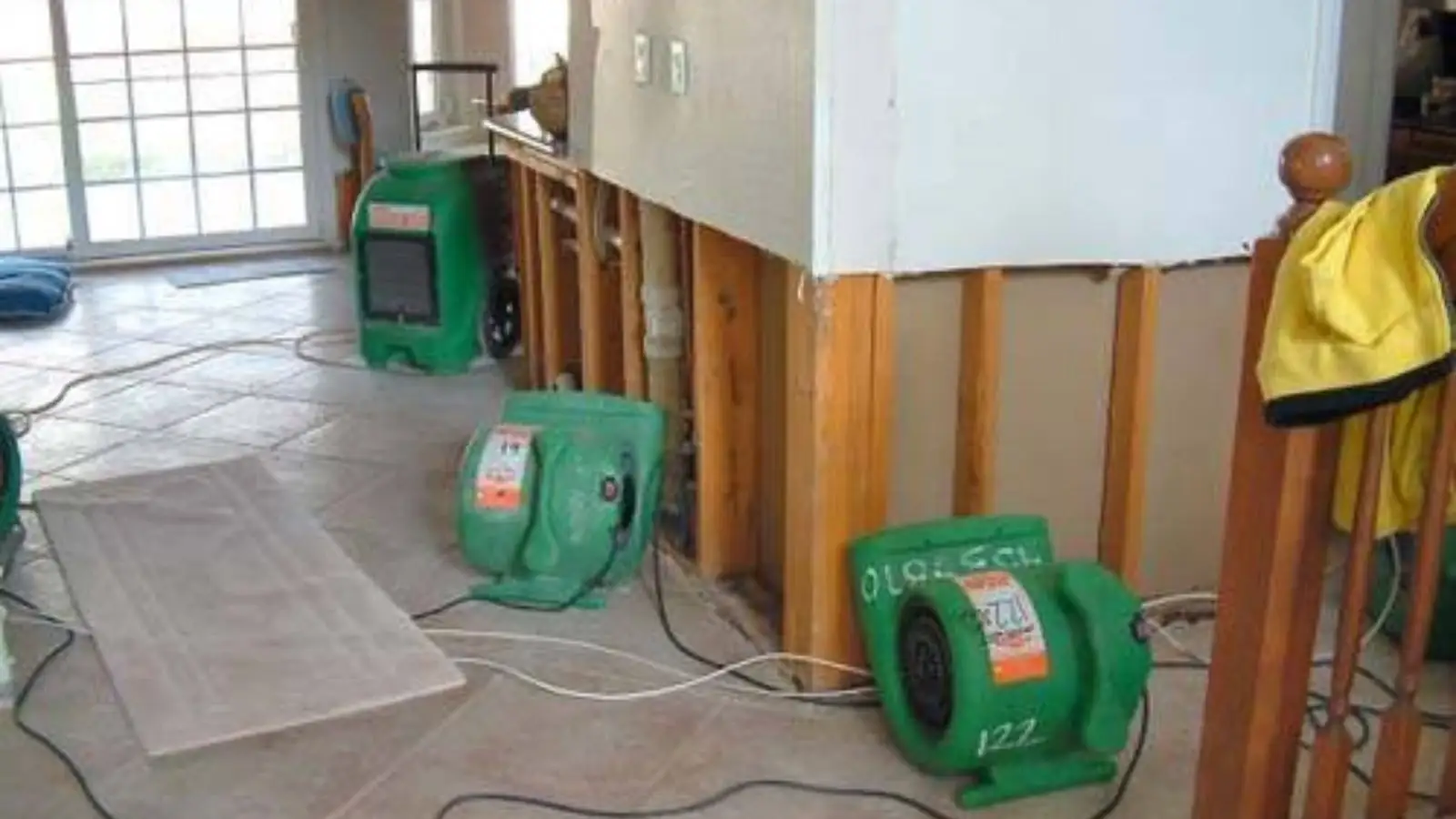
Repair from water damage starts only after the structure is dry. A crew removes wet materials, confirms with a moisture meter that the framing and subfloor read dry, and then rebuilds drywall, insulation, flooring and finishes. In American Fork that sequence is the same whether the water came from a burst pipe, a roof leak or a flooded basement.
The most common mistake is repairing too early. Covering a damp wall with new drywall traps moisture inside, and the result is a repaired surface over a mold problem. This guide walks through the order of work, who does each part and where homeowners can save money without cutting corners.
Step one: confirm the structure is dry
A moisture meter reads the water content of wood, drywall and concrete. Crews compare the readings in the damaged area with a dry reference reading from an unaffected part of the house. Repairs begin when the two match.
The EPA recommends drying water-damaged areas and items within 24 to 48 hours to prevent mold growth. If that window was missed, the crew inspects for mold before closing anything up. The water mitigation stage is what delivers the dry structure that repair depends on.
Step two: sort what stays and what goes
| Material | Often saved | Often replaced |
|---|---|---|
| Drywall | Dry, sound panels with no stain through | Soft, sagging or long-wet panels |
| Insulation | Rarely | Most wet batt and blown insulation |
| Carpet pad | Almost never | Nearly always |
| Hardwood | Mild cupping that settles after drying | Buckled, split or moldy boards |
| Framing | Almost always | Rotted or softened lumber |
| Cabinets | Solid wood that dries flat | Particleboard that swelled |
The crew marks a cut line a few inches above the highest wet reading on a wall, since moisture wicks upward. Taking out a little more than the visible stain costs less than coming back for a bigger repair later. Soaked materials that cannot be dried are removed during water damage cleanup before the rebuild starts.
Step three: look before you demolish an older home
American Fork has houses from many eras, and the city's historic walking tour lists downtown buildings built between 1877 and 1911. Cutting into an older home can disturb materials that were common long ago. The Utah Department of Environmental Quality says asbestos-containing materials are still found in many older homes, including vinyl tile and sheet rock, and that you cannot tell by looking.
The EPA adds that contractors working in homes built before 1978 must use lead-safe practices on emergency renovations. Ask your contractor how suspect materials are tested before the first cut. If a material tests positive, it has to be removed by a certified asbestos contractor before it is disturbed.
Step four: rebuild in the right order
Framing and subfloor
Soft or rotted lumber is replaced or sistered before anything covers it.
Insulation and vapor details
New insulation goes in dry cavities only.
Drywall, tape and texture
Panels are hung, taped and textured to match the surrounding wall.
Prime and paint
A stain-blocking primer seals any remaining mark before paint.
Flooring and trim
Flooring, baseboards and cabinets return last so they stay clean and dry.
What a homeowner can do while waiting
Keep fans running and the thermostat steady so the dry-down does not stall. Photograph each stage of the work, since the Utah Insurance Department tells policyholders to keep receipts and records. Do not paint or caulk over stains that have not been checked with a meter, because a sealed stain hides a wet spot.
Move furniture and belongings out of rooms scheduled for demolition. Crews work faster and more carefully in an empty room, and your items are less likely to pick up drywall dust. If you have an older home, ask before anything is cut.
What repair looks like by room
| Area | Common repairs | What slows the job |
|---|---|---|
| Ceiling | Cut out stained drywall, replace insulation, texture and paint | Sagging panels that need support, attic access |
| Bathroom | Replace wet subfloor, repair or replace vanity and flooring | Tile that has to match, plumbing access |
| Basement | Replace lower drywall, baseboards and flooring | Concrete that dries slowly, finished walls |
| Kitchen | Replace cabinet bases, flooring and wall sections | Cabinet lead times, appliance moves |
These are examples, not quotes. Each house has its own scope, and the crew writes it after inspecting the damage.
Where the money goes
Repair cost depends on the water category, the area affected, the materials involved, how long drying took and how much has to be rebuilt. No honest article can name a price for your house. Ask any contractor to explain the scope and price before work starts, and compare the written scopes line by line instead of comparing totals.
Questions to ask a repair contractor
- Has the structure been checked with a moisture meter, and can I see the readings?
- Will you test suspect materials before demolition in an older home?
- Is the scope in writing, with the price explained before work starts?
- Are you licensed and insured, and can you say so in writing?
- What happens if you find more damage once the wall is open?
Want a repair scope for your house?
Call dispatch and a crew will explain what the repair involves before any work starts.
Common questions about repair
Drying comes first and usually takes several days. Repairs then run from a few days for a patched ceiling to a few weeks when floors, cabinets and drywall all have to be replaced. The crew gives you a schedule once the scope is written.
Make only the temporary repairs that stop more damage, such as shutting off water or tarping a roof. The Utah Insurance Department advises keeping receipts and not having permanent repairs made until the insurer has inspected the property.
For a small, dry patch, many homeowners can. When the wall was wet for days, when the area is large or when the house is old enough that asbestos or lead could be present, hire a contractor who tests before demolition.
The city's Building Department enforces the building code and inspects construction, but its public page does not list which repairs need a permit. Ask the department before you start, especially for plumbing, electrical or structural work.
It happens. Hidden rot or mold behind a wall changes the scope, and a good contractor stops, shows you what was found and explains the revised plan and price before continuing.
Water still spreading or a question this page did not cover? Call (385) 988-9410