A shower that leaks into the ceiling or the room below almost always fails in one of four places: the shower pan or base, the drain connection, the valve and its supply lines, or the grout and caulk. The first three are hidden and can leak for weeks before a stain shows. Grout and caulk are the easiest to see and the cheapest to fix.
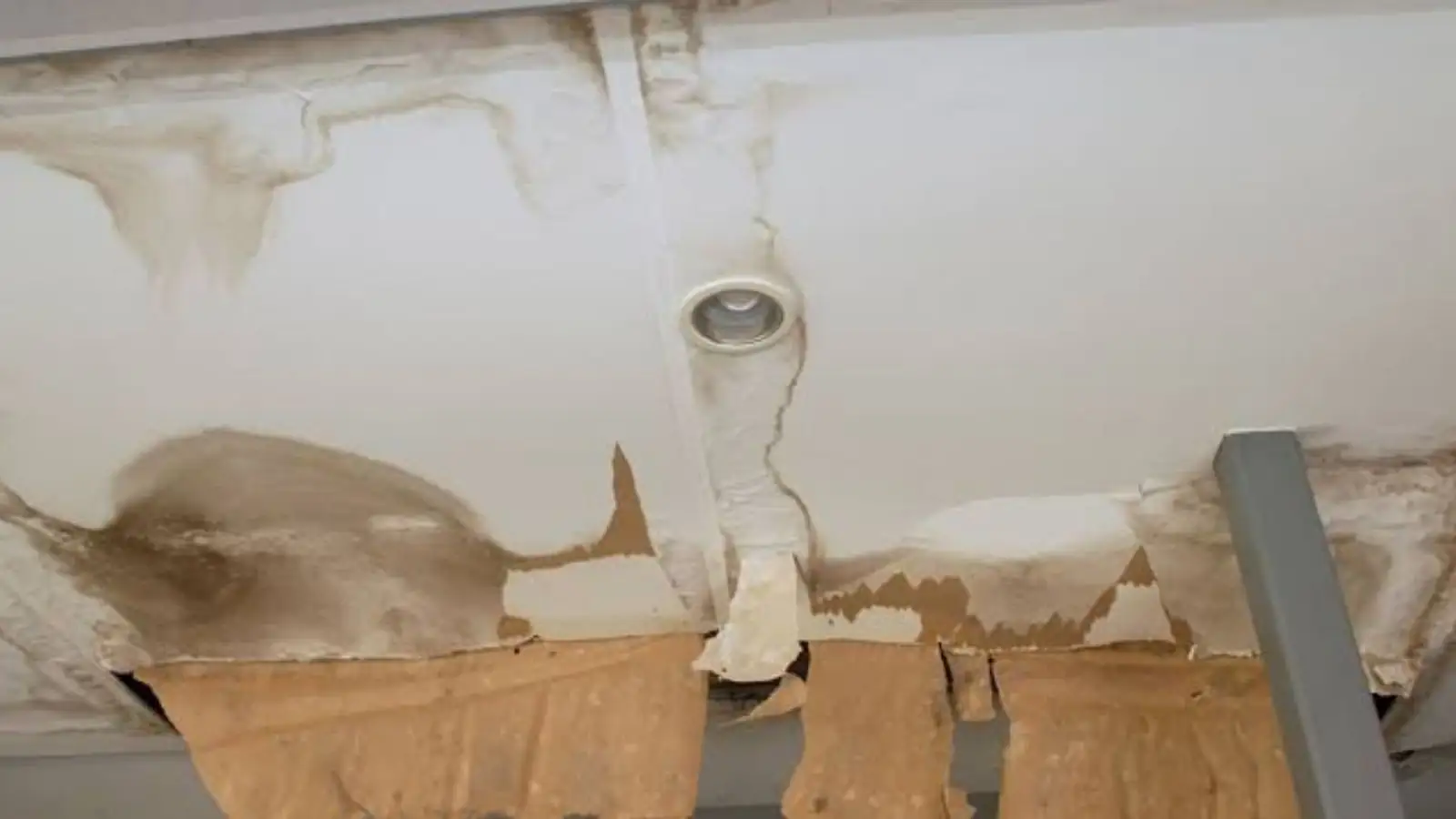
In American Fork the damage tends to show up as a brown stain, a soft spot or a bubble in the ceiling under an upstairs bathroom, or as damp drywall on the wall of a basement bath. This guide covers how to narrow down the source, what the damage looks like below, the order of repair and the mold risk.
Match the symptom to the likely source
| What you notice | Likely source | How to confirm |
|---|---|---|
| Stain grows only after showers | Shower pan, base or drain flange | Plug the drain, fill the pan a few inches and watch the ceiling below for hours |
| Stain appears even with no one showering | Supply line or valve connection | Check the water meter or look behind the access panel |
| Wet baseboard or wall next to the shower | Failed caulk or cracked grout | Look for gaps at corners and the tub or pan edge |
| Drip directly below the drain | Drain body or trap connection | Run water down the drain only and watch below |
| Musty smell in the room below | Slow, hidden leak | Check ceiling and wall cavities with a moisture meter |
| Loose or hollow tiles | Water behind the tile | Tap tiles and check for soft backer board |
Test one thing at a time. Run the shower head, then the drain alone, then the valve with the water off at the fixture, and give each test enough time for water to travel. Water follows framing and pipes, so the wet spot below can sit several feet from the actual leak.
What the damage looks like below
- Early stage: a faint tan ring or a slightly darker patch in the ceiling that appears after showers.
- Active leak: a ring with a darker edge, paint that bubbles or peels and a damp feel to the drywall.
- Advanced: a soft or sagging ceiling, rust at screw heads, dripping and a musty smell.
- Long-term: swollen trim, warped subfloor above and visible mold on the back of the drywall.
A sagging or bulging ceiling holds water and can drop. Stay out from under it and move furniture away. A crew can release the water safely and open the section, which is part of water mitigation, and that is safer than poking it yourself.
Two cautions apply before any testing. Do not cut open a wet ceiling yourself unless it is sound and you are standing clear of the area below it. Also avoid heat guns or space heaters aimed at drywall, because fast surface drying leaves the cavity wet behind it.
What to do in the first day
Stop using the shower
Every use adds water to the cavity. Use another bathroom until the cause is known.
Shut off the water if it is dripping
Close the shower's stop valve or the home's main valve if you cannot isolate the line.
Document everything
Photograph the ceiling, the shower and the wall behind it, with dates.
Dry what you can reach
Run fans and a dehumidifier in the room below and open the bathroom door.
Call your insurer
The Utah Insurance Department advises calling as soon as possible, keeping receipts and not making permanent repairs before the insurer inspects.
The EPA says to dry water-damaged areas and items within 24 to 48 hours to prevent mold growth, and that anything wet longer that cannot be dried should be removed and discarded. That clock matters more for a hidden shower leak, since insulation and framing stay wet long after the surface seems fine.
The repair sequence
The order matters, because rebuilding before the leak is fixed repeats the problem. A plumber or tile contractor fixes the shower failure first. After that, water damage repair covers the ceiling, wall and floor rebuild once the structure reads dry.
Typical order of work
- Find and fix the failed part of the shower
- Test the repair with a water run and watch the ceiling below
- Remove wet drywall and insulation with a margin past the wet readings
- Dry the cavity and confirm with a moisture meter
- Replace insulation, hang and finish drywall, prime and paint
- Re-tile or re-seal the shower last
What we do and do not do
We handle the water side: drying, removal of wet materials and rebuilding the ceiling and walls. We do not repair plumbing or install shower pans, so you will need a licensed plumber or tile setter for the leak itself. We can coordinate timing so the repair and the drying do not stall each other.
Mold risk and older homes
The EPA says the key to mold control is moisture control. If visible mold is present, sampling is usually unnecessary. Areas smaller than about 10 square feet can often be cleaned by the homeowner, and absorbent materials such as ceiling tiles may need to be thrown away if moldy. Health questions about mold belong with a physician.
Older bathrooms add another step. The Utah Department of Environmental Quality says asbestos-containing materials are still found in many older homes, including vinyl tile and sheet rock, and you cannot tell by looking. Materials that test positive must be removed by a certified asbestos contractor before they are disturbed.
Stain under a bathroom?
Call dispatch and describe where the water shows up. A crew will tell you what to check.
Questions about shower leaks
Yes. A failed shower pan, a loose drain flange or a cracked valve connection may leak only while the shower is in use. A stain that grows after showers and stops growing on days nobody showers points to the shower itself.
Not always. A failed caulk line or cracked grout is a surface repair. A leaking pan or a hidden drain connection usually needs the tile and the base removed so the plumber or tile setter can reach the failure.
A wet ceiling cavity often needs several days with fans and a dehumidifier. Insulation above the drywall holds water longer than the drywall does, so a ceiling that feels dry to the touch can still be wet inside.
Not by itself. A stain is a mark left by what the water carried, and it shows through ordinary paint. Once the ceiling is dry and sound, a stain-blocking primer and fresh paint hide it.
A leak inside the shower is a private plumbing and building matter, not a city water line issue. The city's Building Department enforces the building code, so it is the place to ask whether your repair needs a permit before work starts.
Water still spreading or a question this page did not cover? Call (385) 988-9410