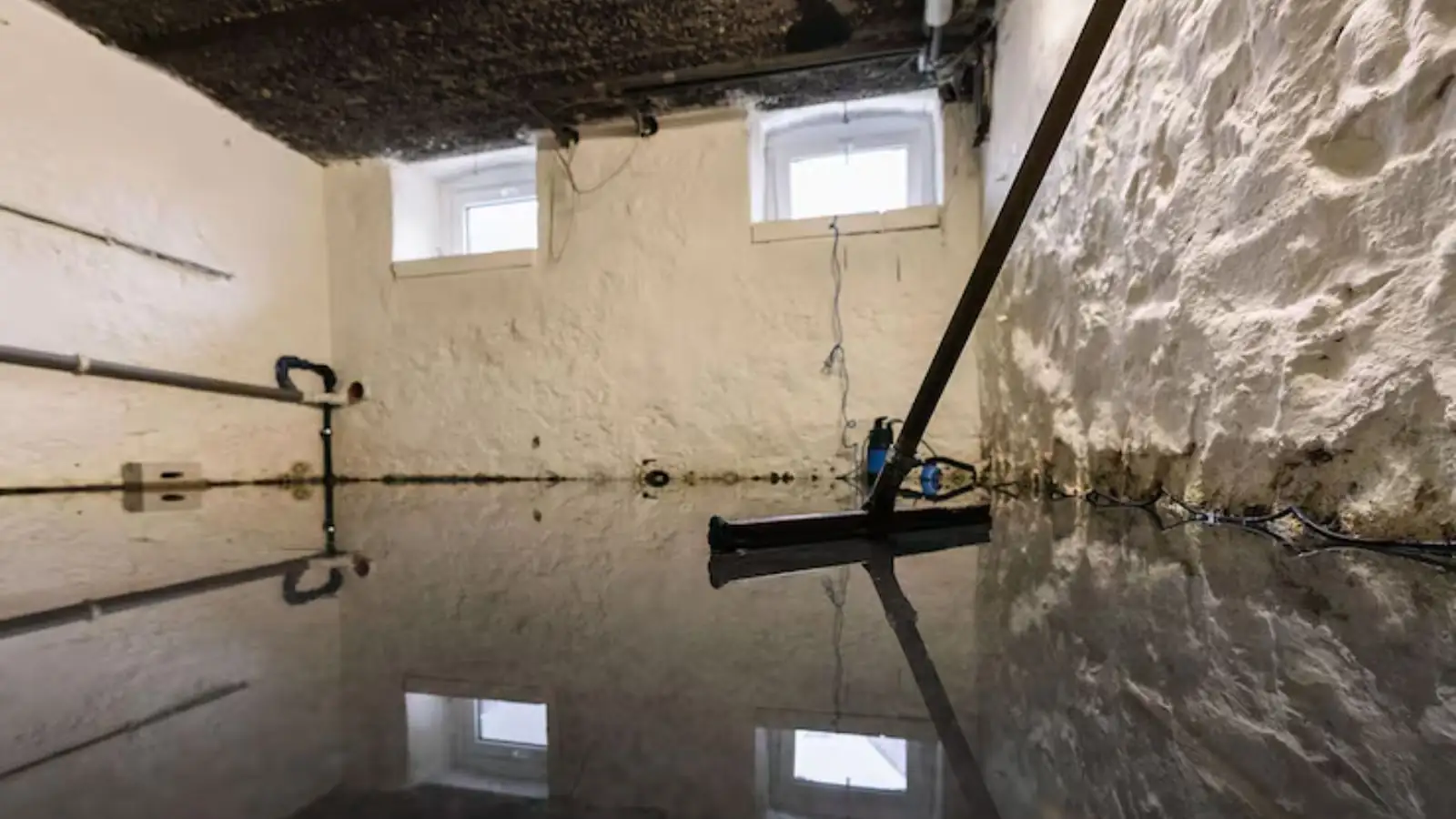
Basement water damage repair cost depends on five things: how finished the space is, the type of water, how long it was wet, how long drying takes and how much has to be rebuilt. No honest article can name a price for your house, and any company that quotes a total without seeing the basement is guessing.
This guide explains each factor so you can read an estimate, compare scopes and understand where insurance helps and where it does not. In American Fork, the stakes are higher because spring runoff and flood coverage rules shape what you can recover.
Finished or unfinished makes the biggest difference
| Basement type | What is usually at risk | Cost direction |
|---|---|---|
| Unfinished, bare concrete | Stored items, wall framing at the base, floor drain area | Lowest, mostly cleanup and drying |
| Partly finished | Carpet, pad, lower drywall, baseboard | Moderate, with demolition and rebuild at the edges |
| Fully finished with bathroom or kitchenette | Drywall, insulation, flooring, cabinets, trim, fixtures | Highest, with a large rebuild scope |
| Finished with built-ins or media room | Custom cabinetry, wiring, flooring, soundproofing | Highest, and harder to match |
| Walkout or egress windows | Window wells, sill areas, adjoining finishes | Varies with the water source |
A finished basement holds more material for water to reach. Drywall wicks water upward, carpet pad soaks it up and insulation holds it. Each of these tends to be removed rather than dried, and each has to be put back.
Water category sets what can be saved
The EPA, citing ANSI/IICRC S500, describes Category 1 water as coming from a sanitary source, Category 2 as significantly contaminated and Category 3 as heavily contaminated and able to carry pathogens or toxins. Clean supply line water starts as Category 1 but can change as it sits. Groundwater, sewer backup and floodwater are in higher categories.
The CDC says to stay out of floodwater, throw away items that cannot be disinfected such as wall coverings, cloth, rugs and drywall, and clean walls and hard floors with soap and water. A higher category means more removal and more disposal, and that raises cost. Ask any company whether its crews work to ANSI/IICRC S500.
Time is a cost, too
- Hours 0 to 24: standing water removal and the start of drying often save drywall and flooring that would otherwise be lost.
- 24 to 48 hours: the EPA's window for drying water-damaged areas to prevent mold growth.
- Past 48 hours: more materials fail the dry test, and mold becomes a scope item.
- Several days of drying: equipment time rises with the size of the space and how deep the water went.
Starting with flood damage restoration early keeps the rebuild smaller. Delay does not just add a day to the bill. It can move materials from the save pile to the replace pile.
Rebuild scope is the other half
Drying and demolition are one part of the estimate. The rebuild is the other, and it depends on what you want back. Matching old paint, trim and flooring takes time, and finishing a basement to a higher standard than before is a choice, not a repair. Water damage repair works best when the written scope separates the two.
What to ask for in a written scope
- The source and category of water, as the crew determined it
- Which materials will be removed, with measured areas, and which will be dried
- How many days of drying equipment are expected and what moisture reading counts as dry
- What is included in the rebuild: insulation, drywall, texture, paint, flooring, trim
- What is not included, such as cabinets, appliances, electrical and plumbing
- How hidden damage will be handled if it is found after the wall is open
- Whether the crew is licensed and insured, in writing
- Whether the crew works to ANSI/IICRC S500 and S520 where mold is present
Equipment and labor also scale with the footprint. A basement with one wet corner needs fewer air movers and a smaller dehumidifier load than a full-floor flood, which needs more machines running longer. Ask how much equipment is planned and why, since equipment counts are easy to compare between estimates.
Insurance realities for basements
The Utah Insurance Department says flood, earthquake, earth movement and mudslide are typically not covered on a homeowners policy, though coverage can be added by endorsement or a separate policy. It also notes that standard flood policies usually have a 30-day waiting period, so a policy bought after water is forecast will not respond to the first event.
Sudden and accidental causes, such as a burst pipe, are often covered, and gradual seepage often is not. Call your insurer as soon as possible, take temporary steps to prevent further damage and keep receipts. The department advises not having permanent repairs made until the insurer has inspected, so photograph everything before demolition.
What we do and do not do
We measure moisture, remove water, dry the structure and rebuild the water-damaged parts. We do not decide coverage or promise what an insurer will pay, and we do not do waterproofing, so a basement that floods every spring needs a separate fix for the outside cause.
Need a scope for your basement?
Call dispatch and a licensed and insured crew will explain what they find before any work starts.
Questions about basement repair costs
Not an honest one. Cost depends on what is wet, how long it has been wet and what the rebuild involves, and none of that is visible by phone. A crew should measure moisture and write a scope before giving a number.
They often cover different scopes. One may include drying only, another may include demolition, new drywall, flooring and paint. Ask each contractor to list what is and is not included.
Typically yes, because contaminated water changes what can be saved and how the crew has to work. The EPA says to call a professional with experience for sewage or contaminated water, and the CDC says to throw away items that cannot be disinfected, such as drywall and rugs.
It depends on the cause. The Utah Insurance Department says flood is typically not covered on a homeowners policy, though coverage can be added by endorsement or a separate policy. Water from a sudden pipe break is treated differently, so ask your insurer about your cause of loss.
A 2024 Utah Department of Public Safety notice says homeowners can look up their address at the FEMA Flood Map Service Center. American Fork is among the Utah County cities where floodplain boundaries changed, so check the current map.
Water still spreading or a question this page did not cover? Call (385) 988-9410