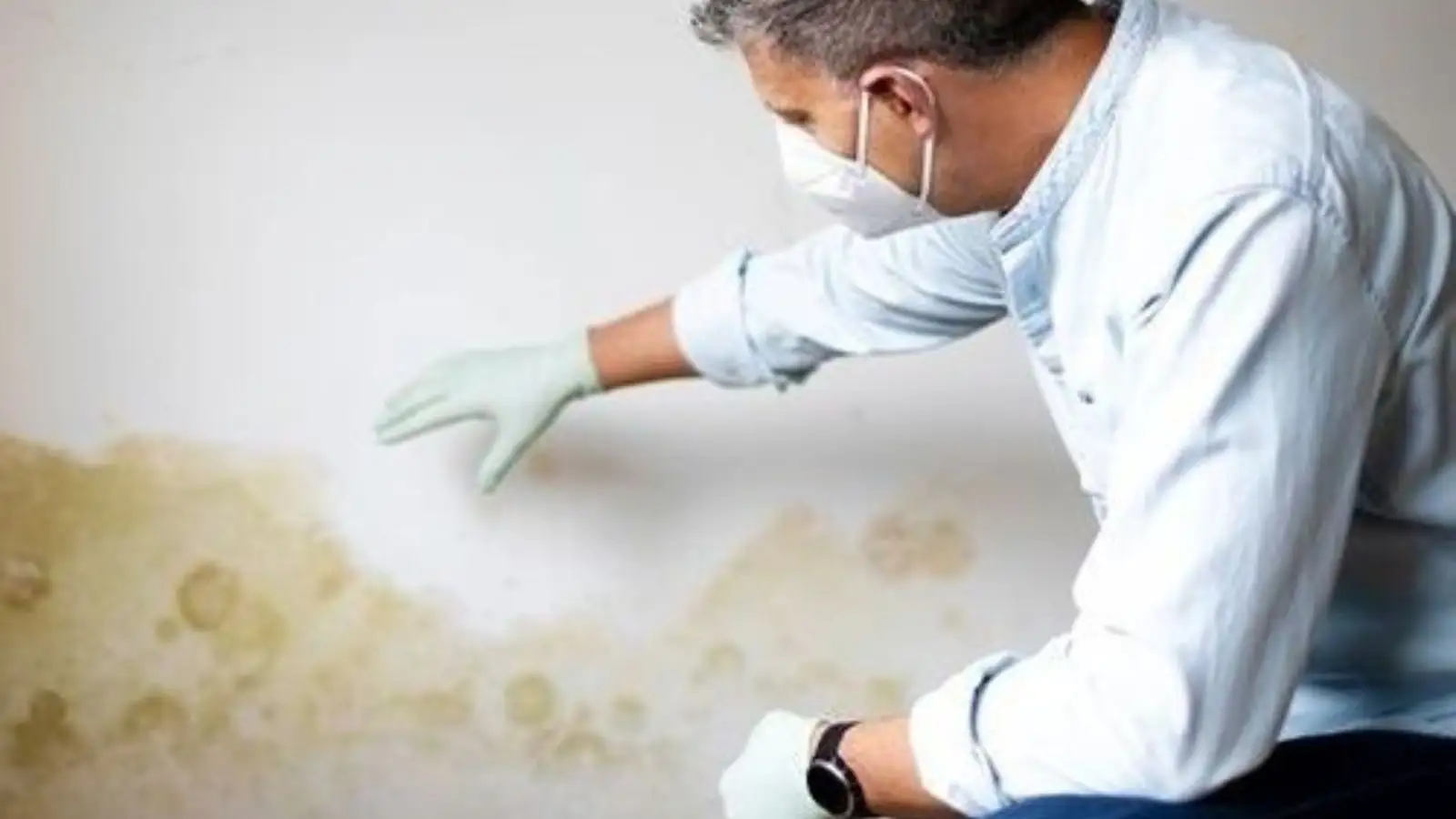
Water damage in walls is found by combining what you notice with what a moisture meter reads. Common signs are a musty smell, bubbling or peeling paint, baseboards that gap or swell, and spots on the wall that feel warmer or cooler than the rest. A crew confirms the cause with a meter and sometimes a thermal camera, and opens the wall when instruments cannot give a clear answer.
The tricky part is that water behaves in the dark. This guide covers the clues, the tools, what happens to insulation and drywall once they are wet and what you can safely do while you wait.
Signs a wall is wet inside
Walls rarely announce a problem all at once. Look for several small clues that point to the same spot.
- Smell: a damp, earthy odor near one wall that gets stronger when the room is closed up.
- Paint and texture: bubbling, blistering or peeling, often with a faint tan or yellow ring.
- Baseboards and trim: gaps at the floor, swelling or edges that lift away from the wall.
- Temperature: a patch that feels cool or clammy to the back of your hand.
- Drywall: a soft spot that gives under light pressure, or seams that show through the paint.
- Sound: a hollow or dull thud when you tap, compared with the wall beside it.
One sign is a reason to look closer. Two or three together, in the same place, make a wet wall likely.
How crews find the water
Restoration crews use tools that read moisture without tearing anything apart. Each answers a different question, and none works alone.
| Tool | What it shows | Limit |
|---|---|---|
| Pin moisture meter | Moisture inside wood or drywall at the probe tip | Reads only where it is pushed in |
| Pinless meter | Moisture under the surface across a wide spot | Can be thrown off by metal or dense materials |
| Thermal camera | Temperature differences that suggest wet areas | Cannot confirm water by itself |
| Hygrometer | Humidity and air moisture in the room | Says nothing about a specific wall |
| Borescope or small cut | A direct view into the wall cavity | Needs a hole, even a small one |
A meter works best by comparison. The crew takes a reading in a dry wall of the same material and compares it with the suspect area. A thermal camera is used to map where to place the meter, then the readings decide what is wet.
Why opening the wall is sometimes the only answer
Instruments see through surfaces only so far. Foil-faced insulation, thick plaster and tile backer board can all hide wet spots, and a source that has stopped leaking leaves little temperature difference for a camera to find.
If readings stay high, if the smell persists or if the leak was long-running, the safest check is a small inspection cut. It shows the cavity, the bottom plate, the back of the drywall and the insulation. A small cut is easy to patch if the wall turns out to be dry.
What happens to wet drywall and insulation
Drywall that gets wet briefly can sometimes be dried in place. Drywall that stays wet for days softens, swells and can grow mold on its paper facing. The CDC advises throwing away items that cannot be disinfected, with wall coverings and drywall among them, when the water was floodwater.
Insulation behaves differently. Fiberglass batts hold water and lose much of their performance, and blown-in types can clump and stay wet for a long time. Most wet insulation is removed and replaced. The EPA says to remove and discard materials that stay wet for more than 24 to 48 hours and cannot be dried, so a wet cavity left alone for a week usually means demolition.
When the water was not clean
Under industry standards, Category 1 water comes from a sanitary source, Category 2 is significantly contaminated and Category 3 is heavily contaminated. Water from a sewage backup or an overflowing toilet with waste is not a do-it-yourself job. Call a professional with experience.
What to do while you wait
Find and stop the source
Shut the water at the nearest fixture valve or the main. A leaking supply line, a dripping drain or a failed seal are common starting points.
Mark the wet area
Trace the edge of the stain in pencil with the date. If it grows, tell the crew.
Pull furniture away
Move couches and bookcases from the wall so air reaches the surface.
Run gentle airflow
A fan across the wall and a dehumidifier in the room help, but they do not dry the cavity.
Do not drill or cut yet
Cutting into a wall of unknown age can release dust you do not want in the air. Wait for guidance.
The reason to avoid cutting first is in the next section. Older walls can hide materials that need testing before they are disturbed.
Older homes and unknown materials
Utah's environmental quality agency reports that older houses often still contain asbestos-containing materials, vinyl tile and sheet rock among them, and sight alone cannot identify them. Materials found to contain asbestos must be removed by a certified asbestos contractor before being disturbed.
The EPA adds that contractors in homes built before 1978 must use lead-safe practices on emergency renovations. If your home is older, ask the crew how they handle testing before the first cut.
Think there is water behind your wall?
Call dispatch with what you have noticed. A crew can bring meters and a thermal camera and tell you whether the wall needs to be opened.
Repair, mold and what we do
Once the cavity is dry, rebuilding is straightforward: new insulation, drywall, tape, texture and paint. Our water mitigation crews handle the drying and wall opening, and the water damage repair team rebuilds. Crews are licensed and insured.
Our limits
We find moisture, dry the structure and rebuild finishes. We do not repair plumbing, so a failed supply line or drain needs a plumber. If visible mold is present, the EPA says sampling is usually unnecessary, and health questions about mold belong to a physician.
Common questions about wet walls
Yes. Water can sit in the cavity between studs for days before it reaches the surface. A damp smell, a soft baseboard or a wall that feels cooler than its neighbors can show up long before a stain does.
No. A thermal camera shows temperature differences, and those can come from wet drywall, a missing patch of insulation or a draft. Crews confirm what the camera suggests with a moisture meter and, if needed, a small inspection hole.
Often a small opening, about the size needed to see the cavity and the bottom plate. If the cavity is wet, the opening grows to follow the damage. A small, clean cut is easier to patch than a large exploratory one.
It can, if the line enters near that wall. The city requires water laterals to be buried at least 48 inches deep unless the engineer approves otherwise, so a leak underground is usually outside the home, but water can still track along the foundation. A plumber and the city water department can sort out where the line is leaking.
That hides the sign without fixing the moisture. If the bubbling returns, the wall is still getting wet. Find the source first and have the cavity checked.
Water still spreading or a question this page did not cover? Call (385) 988-9410