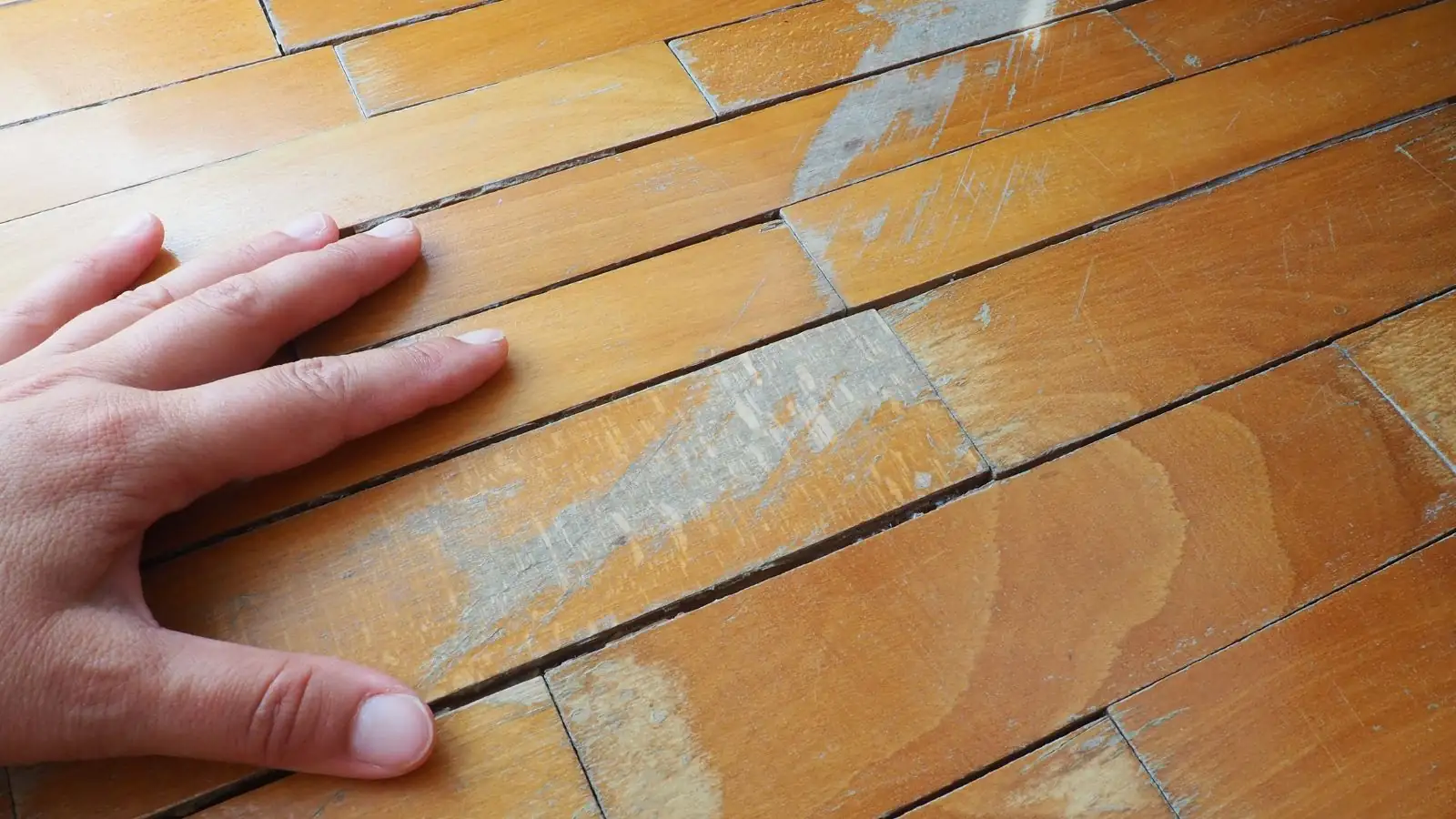
Hardwood floors can get wet from a dishwasher or sink leak, a pipe in the wall, a window or door that let in storm water, or damp air from a crawl space. A floor that looks fine on the day of the leak can lift at the edges days later.
Why boards move: moisture content
Wood is always trading moisture with the air around it. The USDA Forest Products Laboratory describes wood as swelling when it gains moisture and shrinking when it loses it. In its floor-care publication it also says a significant rise in moisture content can swell the boards enough to leave a buckled floor.
Solid and engineered wood react differently. Solid planks swell across their width and can push against each other and the walls. Engineered boards have a wood veneer over layered backing, so they often hold flatter, but water that gets into the seams can lift the top layer or loosen the glue.
What you see and what it means
| What you see | What it often points to |
|---|---|
| Cupping: board edges higher than the center | Moisture from below, such as a damp subfloor or crawl space, or water that soaked in from the sides. |
| Crowning: board centers higher than the edges | Often shows after a cupped floor was sanded while still wet, or when the top dried faster than the underside. |
| Buckling: boards lifting off the subfloor | A large amount of moisture. This usually needs prompt attention and may mean replacement. |
| Dark gray or black stains | Water that stayed on the wood long enough to stain the fibers or the finish. |
| Gaps between boards | Boards that shrank after losing moisture. See the note on dry-air gaps below. |
Gaps in winter are not always a leak. When the furnace runs and indoor air dries out, many floors open slightly along the seams and close again in warmer, damper months. A gap with no cupping, no stain and no history of water is more likely seasonal. A gap beside a cupped board, a stain or a wet subfloor is a moisture question, and a meter will tell the two apart.
Safety and first-hour steps
Stop the source
Close the fixture valve or, if you cannot find the leak, the main water shutoff where the line enters the house. For a pipe in the wall, shut the main before anything else.
Mind the electrical
Do not walk through standing water near outlets, baseboard heaters or a plugged-in dishwasher. Turn off the breaker for that area if water reached a receptacle.
Lift what sits on the wood
Take up rugs, mats and furniture. Covered wood stays wet longer. Towel up loose water.
Photograph the floor
Take wide and close-up photos. For claims, the Utah Insurance Department advises photographing the damage and contacting your insurer promptly.
Call before the boards change
Call (385) 988-9410. Tell us when the water arrived and what kind of wood floor you have.
How we dry a wood floor
We begin with readings. A pin meter or pinless meter checks the boards, the subfloor and the wall base against a dry reference area in the same house, which follows the ANSI/IICRC S500 reference for professional water damage restoration. Over a crawl space, we also check the joists and the underside.
Drying happens in a controlled way. Floor drying mats or panels draw moisture out through the surface, air movers move air across and under the boards, and dehumidifiers keep room air dry enough to accept it. The EPA remediation guide lists dehumidifiers, gentle heat and fans for wood, and it adds a plain caution: use care when applying heat to hardwood floors.
After that we wait. Boards often keep changing for days, and we do not decide what to replace until readings are stable and the floor has had time to settle. The EPA flood cleanup page mentions a moisture meter reading of 15 percent or less before refinishing. Sanding and refinishing come last, not first.
Boards starting to lift or cup?
Early drying gives wood a real chance of lying flat again, so tell us what you see.
What changes the cost of hardwood floor work
- Square footage that is wet and how far the water spread under the finish.
- Solid or engineered wood, and whether the floor is nailed, glued or floating.
- Days of drying needed to bring boards and subfloor to a stable reading.
- Number of boards to replace and whether a match is available.
- Whether the subfloor, underlayment or crawl-space framing also needs drying.
- Whether the room must be refinished to blend repairs.
Insurance fit for wood floors
Policies differ on sudden versus gradual leaks, and flood and sewer losses are often handled separately. Ask your insurer how your loss is classified. Keep photos, moisture readings and receipts, and do not schedule permanent floor repairs until the insurer has inspected, as the Utah Insurance Department advises.
Mistakes that cost boards
- Sanding too early. Sanding a floor that is still wet can lock in crowning or cupping and make it worse once the boards dry.
- Covering wet floors with rugs, plastic or boxes, which holds water against the wood.
- Using a heat gun, space heater or hair dryer to rush drying. Fast heat can crack and split boards.
- Waiting a week for boards to flatten on their own. The EPA says mold can grow on wood that stays wet for more than 24 hours.
We handle drying and floor restoration, while a plumber stops the leak. Wet floors in a basement or lower level may also need our structural drying process, and the first-days steps are on our water mitigation page. We also serve Lindon and Alpine.
Questions about hardwood floor water damage
Yes. Wet boards change quickly, so we offer same-day response when available. Stop the water, lift anything sitting on the floor and call us.
Sometimes. Mild cupping can flatten once the boards reach a stable moisture reading, and that can take days. Buckled boards, or boards that were wet for a long time, are more likely to need replacement.
Only after readings in the boards and subfloor are stable and the floor has stopped moving. Sanding earlier can lock in the shape the wet boards had.
Not by themselves. Dry indoor air can open seams along a healthy floor. Gaps with stains, cupping or damp readings point to water instead.
Fast heat can crack and split boards. The EPA guide cautions about heat on hardwood, so controlled drying with mats, air movers and dehumidifiers is the safer route.
Floor boards lifting, darkening or opening up? Call and we will check the moisture before you decide. Call (385) 988-9410