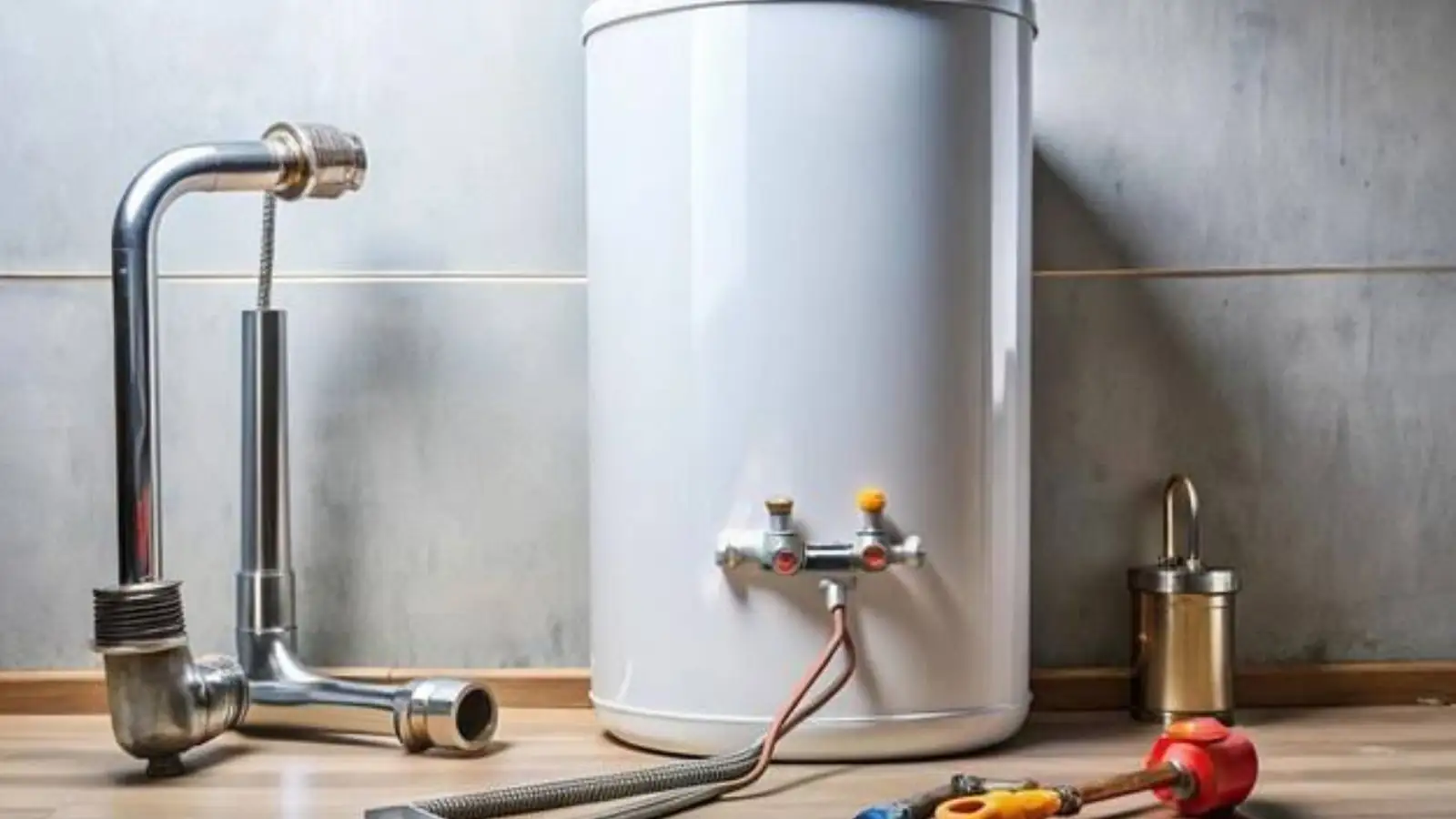
In many homes the water heater sits in a basement, a garage or a utility closet off the laundry room. That is convenient until the tank splits, a supply fitting drips or the relief valve starts discharging. The water spreads across a slab or soaks the bottom of finished walls, and a finished basement can hide it for hours.
How a water heater leak happens in American Fork homes
A tank heater can leak in four places: the tank body itself, the temperature and pressure relief valve, the hot and cold supply connections, and the drain valve near the bottom. A tank that rusts through is the serious one, because the whole tank can empty onto the floor.
According to the city's water quality report, American Fork's culinary water comes from two springs and five wells. Water from a failed heater is treated as clean at first, but sitting in carpet pad, drywall and framing it will not stay that way for long.
The US Department of Energy says most storage water heaters last 10 to 15 years, and it recommends draining a quart from the tank every three months to clear sediment. An older unit that has never been drained is a likely candidate for a tank leak.
What you see and what it means
| What you notice | What it usually means |
|---|---|
| Puddle spreading from the base of the tank | Tank body or drain valve leak. Water may still be flowing. |
| Water running from the pipe beside the relief valve | The valve is discharging. A plumber needs to find out why. |
| Drips at the top of the tank | Loose or corroded supply connection. |
| Damp drywall or a musty smell on the wall behind the unit | Slow leak that has been running a while. |
First-hour safety steps
Cut power or gas at the unit
For an electric heater, turn off its breaker. For gas, turn the control to off or close the gas valve on the supply line. Do this only if you can reach it without standing in water.
Close the cold-water inlet
The shutoff valve is on the cold pipe entering the top of the tank. Turn the handle clockwise until it stops. If the valve is stuck, close the main water valve for the house instead.
Stay away from outlets and cords
If water has reached outlets, power strips or the electrical panel, do not walk through it or touch anything. Turn off the main breaker only if the panel is dry and you can reach it safely.
Be careful with hot water
Water from the tank can scald, and a discharging relief valve may release very hot water. Keep children and pets back.
Photograph, then call us
Take photos and video of the unit, the water and the damage for your records, then call us so extraction can begin.
Do not repair the heater yourself
- Replacing a tank, a relief valve or a gas connection is a plumber's job.
- We do not repair or replace water heaters.
- Our work is removing the water and drying the structure so the plumber can work in a dry space.
How we dry out a water heater loss
Because the source is clean supply water, this is usually Category 1 under ANSI/IICRC S500, the standard professional restorers work from. That gives materials a better chance of being saved if drying starts quickly. Look at emergency water removal for how the first visit works.
- Extract standing water with truck-mounted or portable extraction units.
- Pull wet baseboard, and cut drywall a few inches above the wet line when it is soaked.
- Take moisture meter readings and use a thermal camera to find wet areas behind finished walls.
- Set air movers and dehumidifiers, and recheck readings until the structure reaches dry standards.
Our structural drying page explains how we log those readings. If drywall, trim or flooring has to be replaced afterward, that falls under water damage repair.
Heater leaking into the basement?
Shut off the unit and the cold inlet first, then call us for water removal and drying.
What changes the cost
| Factor | Why it matters |
|---|---|
| How long it ran | A tank that emptied overnight soaks more material than a quick drip caught early. |
| Floor and wall finishes | Slab and concrete dry faster than carpet, pad and finished basement framing. |
| Size of the wet area | More wet square footage means more equipment and more drying days. |
| Hidden moisture | Water behind walls or under flooring adds investigation and drying time. |
| Rebuild scope | Replacing drywall, trim or flooring is scoped separately from drying. |
Insurance and water heater leaks
Policies differ, so ask your insurer how they treat a heater failure. In general terms, insurers distinguish a sudden event, such as a tank that bursts, from a slow leak that has gone on for weeks. Keep records either way.
The Utah Insurance Department advises calling your insurer as soon as possible, taking photos and holding off on permanent repairs until the company has inspected.
Mistakes to avoid and strapping
- Letting the heater keep running while you decide what to do.
- Using a household vacuum on standing water. It is not built for it and it risks shock.
- Walking through water near the panel or outlets.
- Assuming a dry-looking wall is dry. Moisture hides behind finished basement walls.
Utah's plumbing code amendments say water heaters must be anchored or strapped against horizontal movement, and the Utah earthquake program recommends strapping as well. The code was amended recently, so ask a plumber to confirm the current rules. Heaters near Pleasant Grove or Lehi follow the same state code.
Questions about water heater leaks
Dispatch is open around the clock, with same-day response when available. Shut off power or gas and the cold-water inlet first, then call us and we will start water removal and drying.
No. A plumber repairs or replaces the heater. We remove the water and dry the basement, garage or closet so the plumber is working in a dry space.
Do not touch it if it has reached outlets, cords or the panel. Even clean hot water can scald, so stay clear until the unit is off and the water has cooled.
Policies differ, so ask your insurer. Sudden failures and slow leaks are often treated differently, which is why photos and a record of when you found it matter.
It depends on the materials and how long the water sat. We check moisture readings each visit and keep equipment running until the structure reads dry.
If a heater has let go and the floor is wet, call now and we will talk you through what to do while a crew gets ready. Call (385) 988-9410