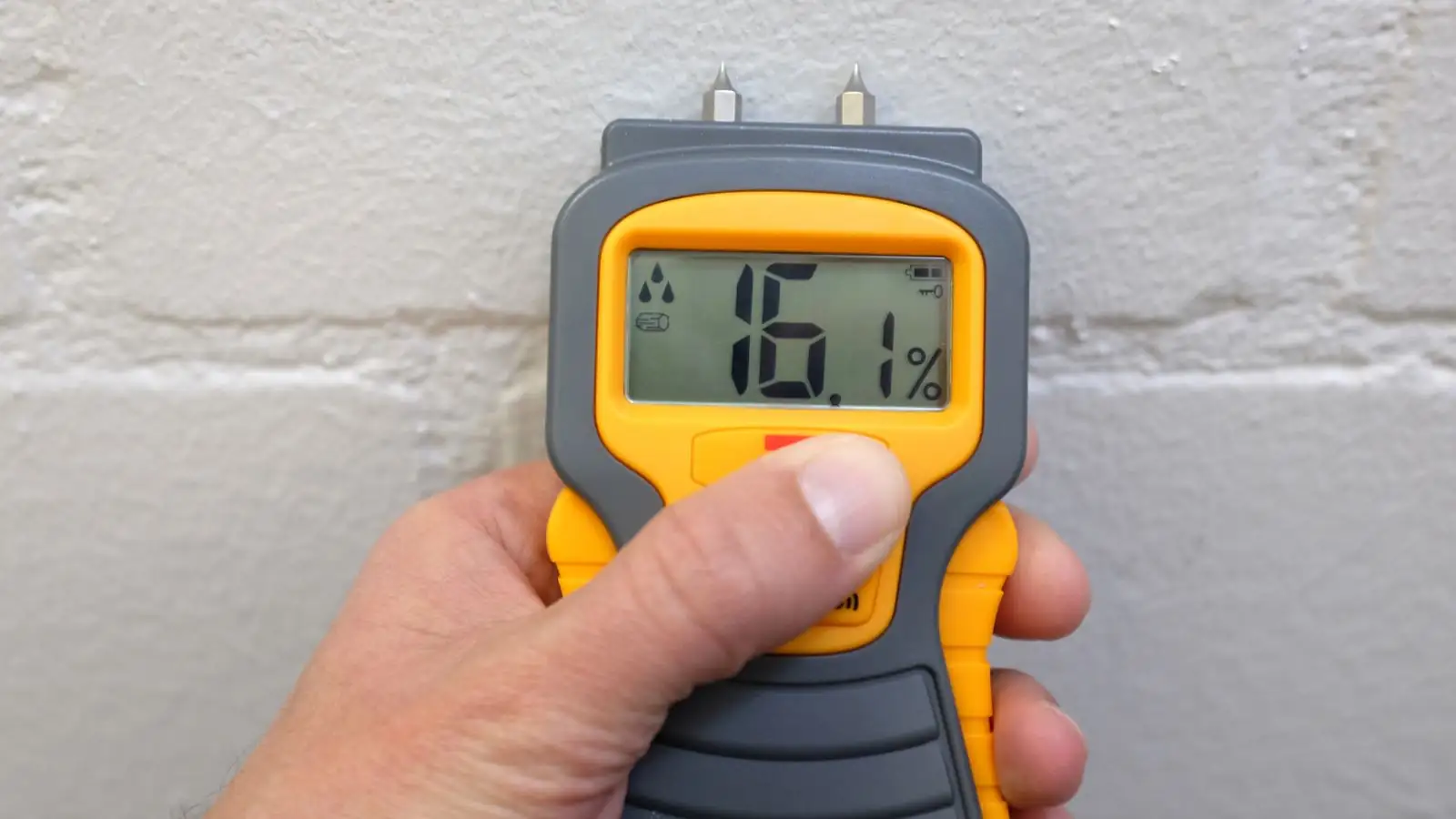
After a pipe break or roof leak in American Fork, the wall can look normal while the insulation, bottom plate and drywall paper stay wet inside. NOAA's 1991 to 2020 normals for Salt Lake City, the nearest long-record station and not American Fork itself, show 15.52 inches of precipitation a year. That is useful context, but a sealed wall cavity cannot trade moisture with outdoor air, so dry weather alone does not dry it.
This page covers the science and the monitoring. The first hours of a loss are on our water mitigation page.
How wet buildings dry
Water leaves a material by turning to vapor, and the speed depends on three things: temperature, airflow across the surface and the difference in vapor pressure between the wet material and the room air. Equipment is chosen to push on those three levers.
Every material also has its own pace. Drywall and carpet give up water quickly. Framing, plaster, hardwood and concrete hold it much longer. That is why the EPA says wet areas should be dried within 24 to 48 hours to prevent mold growth, yet its flood cleanup page notes that a full structure can take several days to weeks.
Equipment and what it does
| Equipment | What it does |
|---|---|
| Air movers | Push air across walls and floors to lift surface moisture and keep air moving through open cavities. |
| Low-grain refrigerant (LGR) dehumidifiers | Cool air to pull water out, and keep room humidity low enough that wet materials keep releasing moisture. |
| Desiccant dehumidifiers | May be used on special jobs such as very cold spaces or deep, dense materials where refrigerant units slow down. |
| Wall-cavity drying | Small holes at the base of a wall let dry air move through insulation and framing without removing the drywall. |
| Floor drying mats | Draw moisture out of wood floors and subfloors from the surface. |
| Thermal camera | Shows cooler wet patches behind finished surfaces so we know where to meter. |
| Pin and pinless moisture meters | Give readings in the material. Pin meters measure at depth, pinless meters scan surfaces. |
| Thermo-hygrometer | Reads air temperature and relative humidity so we can track the drying environment. |
What you see that points to wet structure
- Baseboards that cup or pull away from the wall.
- A cool, damp feel on a wall or floor with no visible water.
- Humidity that stays high even with the heat on.
Surface dry is not dry
A dry finish says little about the stud bay behind it. Readings from unaffected walls in your own home set the target, and wet areas stay on equipment until they match.
Safety and first-hour steps before drying starts
Stop the source
Close the fixture valve or the main shutoff. Drying cannot start until the water stops.
Keep electrical away from wet walls
Turn off breakers for wet rooms and outlets. Do not plug in a household fan or extension cord on a wet floor.
Open doors and drawers
Move furniture off wet floors and open cabinet doors so air can reach the wall.
Keep the heat at a normal setting
A regular indoor temperature helps materials release moisture. Do not turn the furnace off to save power.
Call for monitoring
Call (385) 988-9410 and we will explain what the first visit will measure.
Monitoring: how we know it is dry
Each visit starts with the same set of readings so the numbers can be compared day to day. We record air temperature and relative humidity, then take moisture readings on marked points in walls, floors and framing. A daily log shows whether the numbers are falling, stalling or rising, and the equipment is adjusted to match.
The goal comes from the building itself. Following the ANSI/IICRC S500 reference for professional water damage restoration, we take readings from unaffected materials of the same type and use them as the drying goal. Equipment comes out when the wet materials reach that goal, not when the surface feels dry.
For indoor air, the EPA advises keeping relative humidity below 60 percent, ideally between 30 and 50 percent. During drying the air is often run lower than that on purpose, then returned to normal when the job ends.
Wondering if the wall behind the paint is dry?
Describe the loss and we will explain which readings would settle it.
What changes the cost of structural drying
| Factor | Why it matters |
|---|---|
| Days of drying | Equipment stays until readings reach the goal, so slower materials mean more days. |
| Number of rooms | Each wet room needs its own airflow and dehumidification. |
| Materials affected | Concrete, framing and hardwood dry slower than carpet and drywall. |
| Equipment count | Larger wet areas and higher ceilings need more air movers and dehumidifiers. |
| Access to cavities | Insulated or sealed walls may need more openings. |
What to expect while equipment runs
Drying equipment is loud. Air movers hum all day and night, and dehumidifiers put out heat, so rooms can feel warm. The units draw real power, so expect to see it on the next electric bill. We spread equipment across circuits to avoid tripping breakers.
Equipment keeps running after the surface feels dry because the surface dries first. Moisture deeper in the wall or floor is still moving out, and shutting down early lets it drift back toward the finish.
Mistakes to avoid
- Turning the heat way up to dry walls faster, which can stress flooring and trim.
- Turning equipment off at night because of noise, which resets progress.
- Painting or re-flooring before the readings match the goal.
- Leaving a sealed wall alone because the weather is dry outside.
We do drying and restoration, while a plumber or roofer fixes the source. See our crawl space water damage page for under-floor moisture, and we also serve Lehi and Pleasant Grove. Insurance policies differ on sudden versus gradual water, so ask your insurer, keep your drying logs and keep receipts.
Questions about structural drying
Yes. Wet framing and subfloors should not sit, so we offer same-day response when available. Stop the water, keep the heat on at a normal level and call.
Outdoor air is dry in Utah, but a closed wall cavity cannot trade moisture with it. Dehumidifiers and targeted airflow into the cavity do the real work.
The EPA says to aim for 24 to 48 hours, but dense materials like framing and concrete often take longer. The readings, not the calendar, decide when equipment comes out.
The surface dries first. Moisture deeper in the wall is still moving outward, and equipment stays until readings reach the goal.
Often small holes at the base of a wall are enough to move dry air through the cavity. Larger removal happens when material has stayed wet too long.
It will raise it for the days it runs. Dehumidifiers and air movers draw continuous power, and we can give you the equipment count so you can estimate.
Wet walls or floors that still feel damp? Call and we will explain what we would measure. Call (385) 988-9410