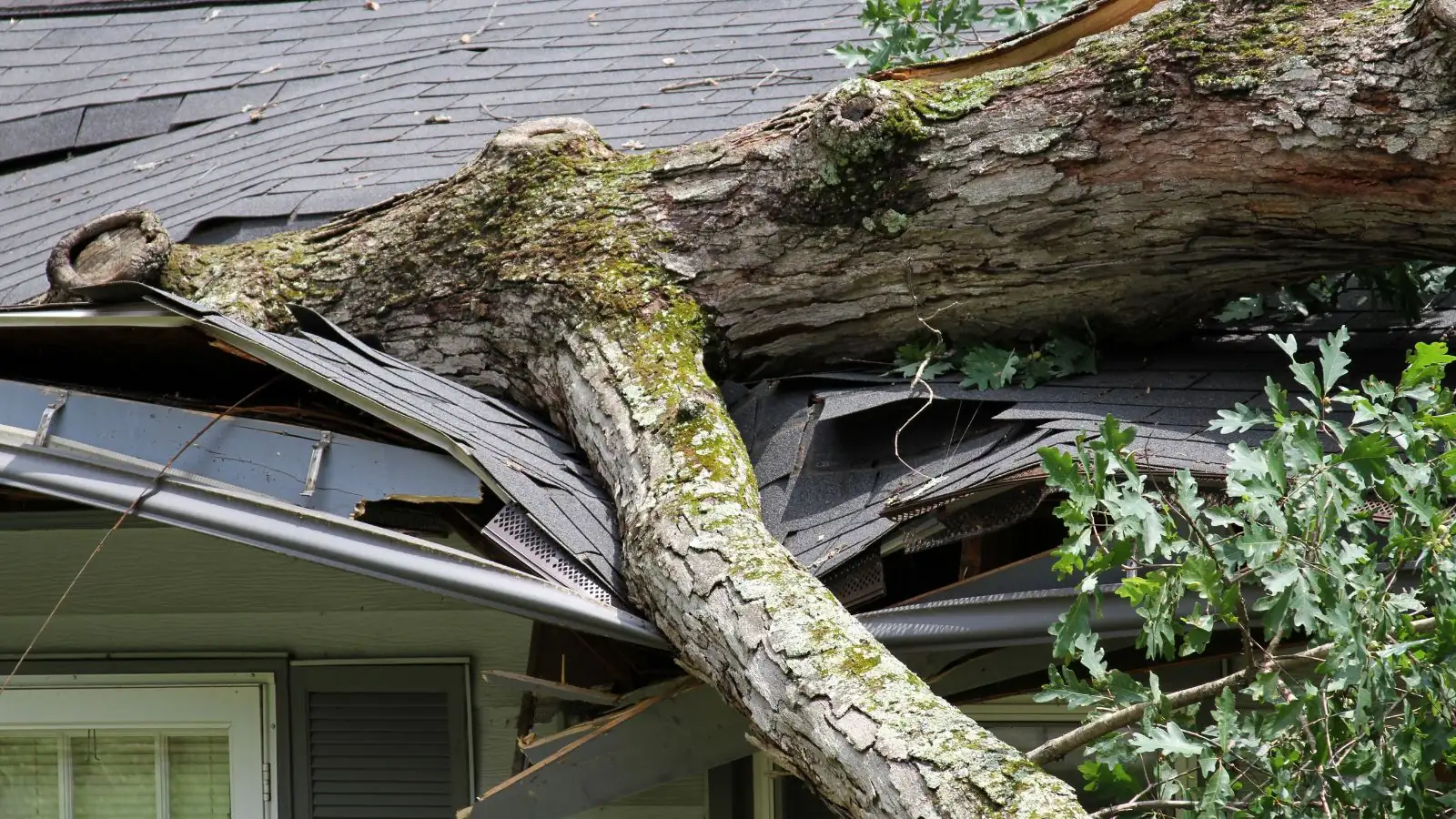
A storm event rarely floods a home in one neat way. Wind drives rain around window frames, hail dents roofing, limbs land on gutters, window wells fill and runoff finds the lowest door. In American Fork the damage often shows up the next morning, when someone walks into a wet basement or notices a stain.
How storms get water into American Fork homes
The Utah State Hazard Mitigation Plan, written by the state's emergency management division, says thunderstorm straight-line winds can exceed 100 mph. It names Utah County among the Wasatch Front counties exposed to severe weather. The same plan defines a cloudburst as rain at 3.9 inches per hour or more.
The city describes a public storm drain system that carries runoff from rain, snow and hail to the storm drain and on toward Utah Lake. It is the public system and not a promise about any one lot. The city's technical manual designs storm drain pipes for the 25-year storm, so a larger event can outrun them.
- Wind-driven rain pushing past siding, window frames and door thresholds.
- Hail or fallen limbs damaging roofing and gutters.
- Clogged gutters and downspouts spilling beside the foundation.
- Window wells filling faster than they drain.
- Surface runoff reaching a basement door or a low wall.
- A power outage that stops a sump pump.
What you see and what it means
| What you notice | What it usually means |
|---|---|
| Water at the base of a basement wall | Runoff or a full window well is entering at the wall, floor joint or window. |
| Wet ceiling after wind and rain | Roofing or flashing may have been damaged. See the roof page. |
| A sump pit full with the pump silent | Power loss or pump failure. Water is rising. |
| Wet carpet along an exterior wall | Water is entering through the wall or a threshold. |
| Debris and mud on a floor | Runoff carried material in, and the water may be contaminated. |
If the water came through the roof, the path is described on roof leak water damage. A river rise or spring runoff event is a different problem, covered on flood damage restoration.
First-hour safety steps
Stay away from downed lines
Treat any fallen power line as live. Keep people and pets back and call the utility or emergency services.
Be careful with electricity
Do not use outlets or touch the panel while standing in water. If water is near the panel or the floor is wet, stay out and call an electrician.
Check the sump pump
If the power is out, a sump pump will not run. Do not carry a generator indoors, and do not wade into a flooded basement.
Do not drive through water
Moving water on a road can carry a vehicle away, and the depth is hard to judge.
Photograph before cleanup
Take photos and video of the water, the damage and any broken windows or roofing before you move things.
Basement or floors wet after the storm?
Call us and we will plan extraction, drying and debris removal for what the storm left inside.
How we extract, dry and clear debris
We use ANSI/IICRC S500, the standard for professional water damage restoration, as our reference. Storm water may carry mud, so we treat it as contaminated until a professional says otherwise.
- Extraction units remove standing water from floors and carpet.
- Wet carpet pad, soaked drywall and insulation are removed where they cannot be dried.
- Air movers and dehumidifiers dry the room and the wall cavities.
- Moisture meters and a thermal camera track where water traveled.
- Wet debris and mud are bagged and removed from the affected rooms.
Board-up, window replacement, gutter repair and roofing are not our work. We dry and clean what is wet. General pump-out work is also described on emergency water removal, and we serve Lehi and Pleasant Grove with the same process.
What changes the cost
| Factor | Why it matters |
|---|---|
| Depth and duration of the water | Deeper, longer events reach more materials. |
| Contamination | Mud and runoff add cleaning and disposal work. |
| Finished basement or bare slab | Finished rooms have more material to dry or remove. |
| Power for drying equipment | Outages can delay drying. |
Where insurance and the city fit
The city says it is not responsible for providing flood protection to personal property. The Utah Insurance Department says interior water damage from a storm, when there is no damage to the roof or walls, is often not covered, and flood is typically excluded from a homeowners policy. Policies differ, so ask your insurer, keep every receipt and photo and do not wait for an adjuster to start drying.
Before the next storm
- Clear gutters and downspouts and point them away from the foundation.
- Clear leaves and debris from window wells.
- Test the sump pump and consider a battery backup.
- Ask your insurer what your policy says about storm and surface water.
Questions about storm water damage
We handle extraction, drying and wet debris removal after storms in American Fork and nearby towns, with same-day response when available. We do not do board-up or exterior repairs.
The city runs a public storm drain system, but it says it is not responsible for flood protection to personal property.
Stay out of rising water. Call us for extraction once it is safe, and an electrician for any wet electrical equipment.
Policies differ. The Utah Insurance Department says water entering with no storm damage to the roof or walls is often not covered, so ask your insurer.
Treat it as contaminated. The CDC advises staying out of floodwater.
If a storm has left water in your home, call us and we will begin with what is standing and what is soaked. Call (385) 988-9410