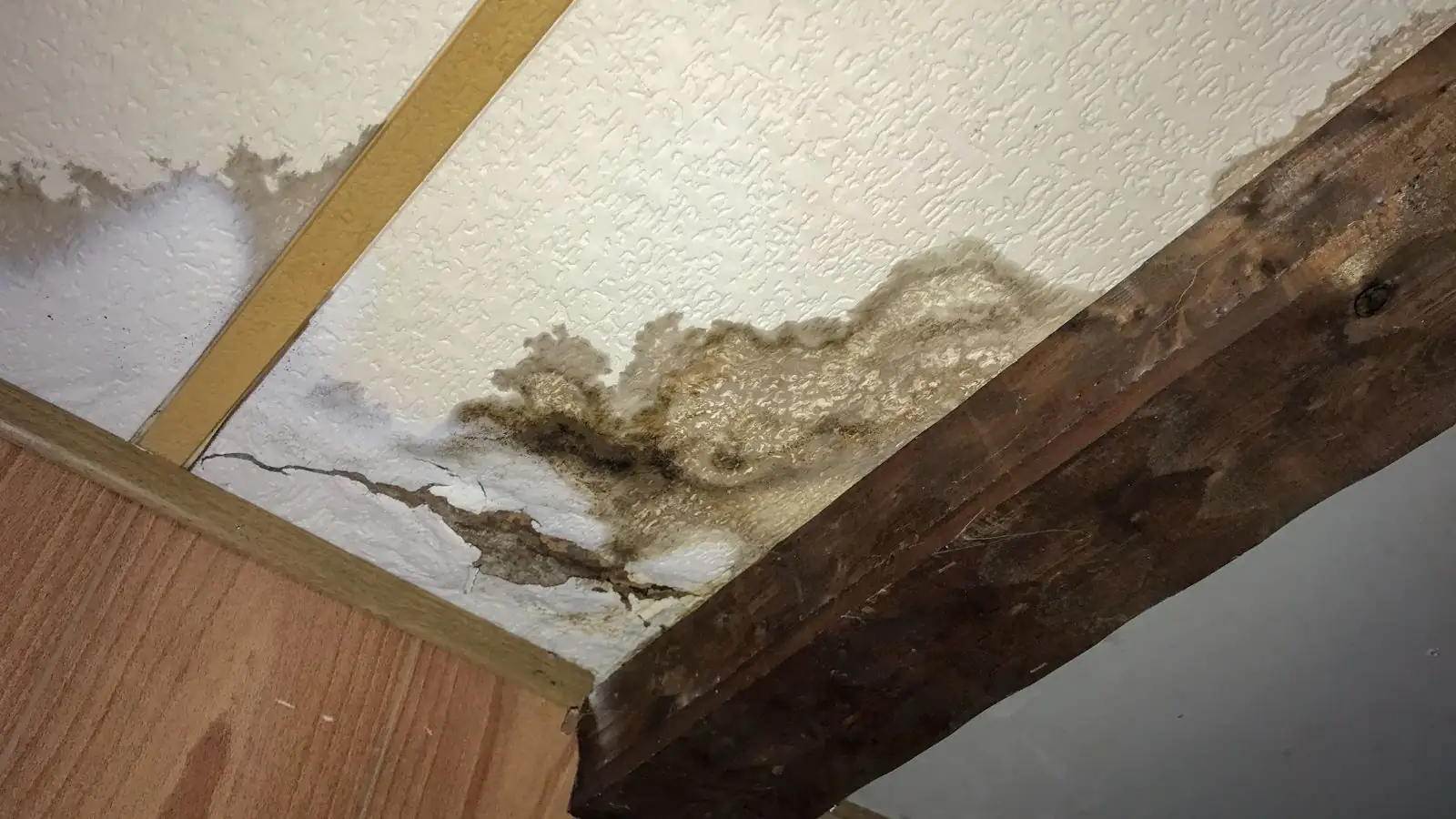
A roof leak rarely shows up where the roof is damaged. Water enters at a worn shingle, a lifted flashing or a cracked vent boot, runs along the decking or a rafter, and soaks insulation before it stains a ceiling. By the time you see a mark, the attic may already be wet. This page covers the roof and attic path only. For a whole-event storm response, see storm water damage.
How roofs let water in around American Fork
NOAA 1991 to 2020 climate normals at the Pleasant Grove station, next to American Fork, give about 41.4 inches of snowfall per year. The same station averages about 18.5 days per year with at least an inch of snow. That is a lot of freezing, melting and refreezing on a roof.
Common entry points follow that pattern.
- Ice at the eaves that holds meltwater behind it so it backs up under shingles.
- Flashing around chimneys, skylights and walls that has lifted or cracked.
- Rubber vent boots around plumbing stacks that split with age.
- Shingles damaged by hail or lifted by wind.
- Nail pops and exposed fasteners in older roofs.
A roofer is the right trade for tarping, shingle repair and flashing. We do not repair roofs, and we say so plainly. What we do is dry and restore everything that got wet inside.
What you see and what it means
| What you notice | What it usually means |
|---|---|
| A ceiling stain that spreads after a thaw or storm | Water is entering at the roof and tracking along framing. |
| Dripping at a light fixture or ceiling fan | Water is collecting in the ceiling cavity above it. |
| Bubbling or peeling paint on a ceiling | Moisture is sitting in the drywall. |
| Wet, matted or discolored attic insulation | Water has been coming in for some time. |
| Damp rafters or musty smell in the attic | A slow leak may have been running between storms. |
A stain that grows only after snow melts points toward ice at the eaves or flashing. One that grows during rain suggests a vent boot or a storm-damaged section of roof.
First-hour safety steps
Stay clear of a sagging ceiling
If a ceiling is bulging, sagging or dripping heavily, leave the room and do not stand under it. Water can pool in drywall until it lets go all at once.
Leave the release to us
Do not poke a hole in a bulging ceiling yourself. Water and wet drywall drop on whoever is standing below, so we release it in a controlled way.
Watch the electricity
If water drips at a light fixture, switch the fixture off from a dry position, such as at a wall switch, and leave the breaker alone if you would stand in water to reach it.
Stay off the roof
A snowy or wet roof is slippery. Do not climb up to look. Call a roofer to tarp and repair it.
Protect and document
Move furniture and rugs out of rooms that are safe to enter, set out containers and photograph the stains before cleanup.
Ceiling wet or attic soaked?
Call us and we will plan drying for the ceiling, the insulation and the walls below.
How we handle a wet ceiling and attic
We use ANSI/IICRC S500, the standard for professional water damage restoration, as our reference. The work starts with moisture readings and a thermal camera sweep to find how far the water spread.
- Controlled release of water trapped in a bulging ceiling, so it does not fall on its own.
- Removal of wet ceiling drywall and insulation that cannot be dried.
- Drying of the attic and wall cavities with air movers and dehumidifiers.
- Containment with plastic sheeting so dust and insulation stay out of living space.
- Repeated moisture readings until framing is dry.
The EPA says to dry water-damaged areas within 24 to 48 hours to prevent mold growth, which is why a ceiling leak found late is urgent. If the water has gone through to a wall or floor, see water damage cleanup. We also serve Lehi and Alpine.
What changes the cost
| Factor | Why it matters |
|---|---|
| Size of the wet attic | More insulation to remove and dry. |
| Ceiling material | Drywall, plaster and textured finishes react differently. |
| How long it leaked | Older leaks reach framing and walls below. |
| Access to the attic | Tight spaces take longer to dry and clean. |
Where insurance fits
Policies differ on sudden storm damage and long-term wear. The Utah Insurance Department tells policyholders to call their insurer promptly, take photographs and make temporary repairs to prevent further damage. Keep receipts for tarps and cleanup, ask your insurer what applies and avoid permanent repairs until an inspection has happened.
Mistakes to avoid
- Climbing onto a snowy roof to look for the leak.
- Painting over a stain without drying what is behind it.
- Leaving wet attic insulation in place after the roof is fixed.
- Waiting for the stain to stop growing before calling anyone.
Questions about roof leak water damage
We handle the water inside the house when a roof or attic leaks in American Fork and nearby towns, with same-day response when available. We do not repair roofs.
No. Tarping and shingle repair belong to a roofer. We dry and restore the ceilings, insulation and walls that got wet.
Meltwater can back up behind ice at the eaves or enter at flashing, then soak the attic insulation and drywall.
It can be. Keep people out from under it, and call us to release the water in a controlled way.
The EPA says to dry water-damaged areas within 24 to 48 hours, and insulation that stays wet often has to be removed.
If water has come through your roof into the house, call us and we will start on what is wet inside. Call (385) 988-9410