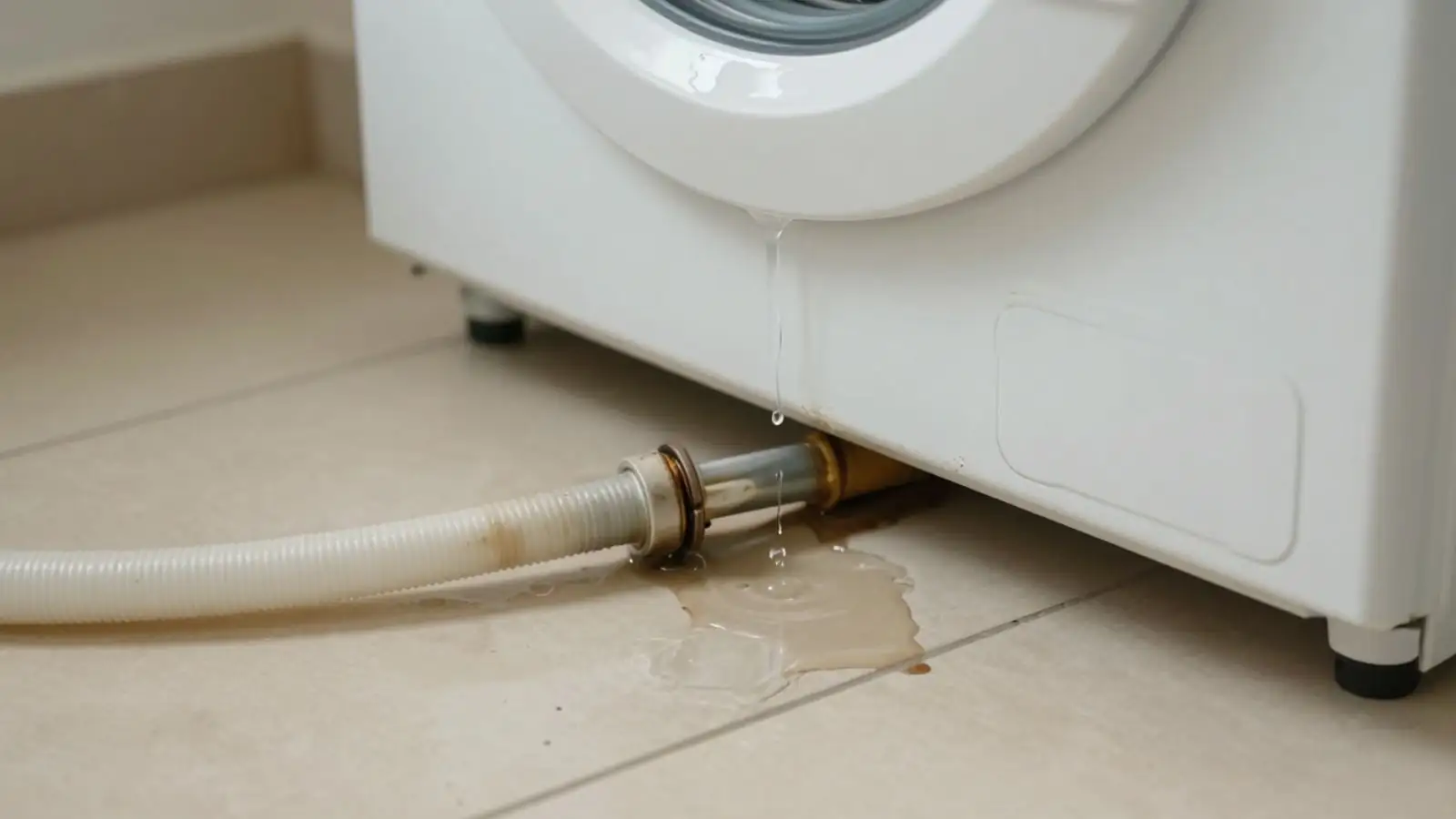
In American Fork, laundry rooms often sit on the main floor of a rambler or on the upper level of a two-story home, and refrigerators are tucked against walls where nobody looks. A hose that seeps or a supply line that weeps can wet the subfloor for a long time before a stain appears.
Where appliance leaks start
Utah State University Extension lists faulty washing machine supply and drain hoses as a leading cause of water damage, and its home maintenance checklist tells owners to check their washer hoses. The EPA's WaterSense program likewise advises tight connections where hoses and valves meet appliances.
- Washing machine hoses and drain lines: a cracked supply hose, a loose coupling or a drain hose that slips out of the standpipe.
- Refrigerator and ice-maker supply lines: a small tube behind the unit that can drip for months.
- Dishwashers: door seals, inlet valves and drain connections. For cabinet and kitchen-floor damage, see kitchen water damage.
- Upstairs laundry rooms: water that gets past the floor and comes through the ceiling below.
We do not repair appliances. An appliance technician or plumber fixes the hose, valve or line, and we handle the water and the wet building materials.
Signs of a slow leak and what they mean
| What you see | What it can mean |
|---|---|
| Floor feels soft or springy near the machine | Subfloor or underlayment has been wet for some time. |
| Baseboard swelling or paint bubbling at the bottom of the wall | Water is wicking up from behind or beneath. |
| Musty smell in the laundry room or kitchen | Materials are staying damp out of sight. |
| Stain on the ceiling below an upstairs laundry | Water has gone through the floor and into the ceiling cavity. |
| Water pooled behind a refrigerator | Supply line or ice-maker connection is failing. |
Mold needs moisture, and damp materials left in place are what give it that moisture. If you find a musty smell, our mold remediation page explains what happens when drying was too late.
Safety in the first hour
Stop the water
Close the washer's hot and cold valves on the wall, or the small valve behind the refrigerator. If a valve will not turn, shut the main water valve.
Unplug only if it is dry
Pull the appliance plug only when the outlet and floor are dry. If water is near the outlet, shut off that circuit at the panel.
Do not move a full machine
A washer holding water is heavy. Wait for extraction help rather than tilting it.
Record the damage
Photograph the appliance, the floor and any stains. Keep the old hose or line if you remove one.
Call us
Call us and describe where the water went, especially if an upstairs room is involved.
Why the water category matters
Supply-line water is Category 1, which means it is clean when it leaves the pipe. Washer drain water is Category 2, which carries soap, lint and dirt. That difference changes how porous materials are treated, under the water categories in ANSI/IICRC S500.
Category 2 water that soaks into carpet pad usually means the pad is removed. Hard surfaces get cleaned and sanitized. Our water damage cleanup page covers that step in more detail.
How we handle an appliance leak
- Pull the appliance away from the wall or out of its alcove.
- Extract standing and trapped water from the floor.
- Map moisture under flooring and behind baseboards with moisture meters and a thermal camera.
- Dry in place when we can, using air movers, dehumidifiers and sometimes small drilled access points.
- Remove materials that cannot be dried, and recheck readings until they reach dry standards.
Stay safe while you wait
- Unplug the appliance only if the cord and outlet are dry and you are not standing in water
- Close the shutoff valves behind or beside the appliance
- Keep people and pets off wet floors, which can be slippery
- Take photos of the appliance, the puddle and the floor before anything is moved
Found water under the machine?
Close the valves, then call us before the subfloor stays wet any longer.
What changes the cost
| Factor | Effect |
|---|---|
| Time the leak ran | A slow leak that ran for weeks affects more material than a burst hose caught fast. |
| Flooring type | Vinyl and tile over concrete behave differently from carpet, laminate or hardwood. |
| Water category | Washer drain water needs more cleaning and removal than supply water. |
| Upstairs leak | Water that reaches a ceiling below adds a second area to dry. |
| Rebuild | Replacing flooring, trim or drywall is scoped separately. |
Insurance and appliance leaks
Policies differ, so ask your insurer how they treat appliance leaks. In general, a hose that bursts is often treated differently from a leak that went on for a long time. Keep records of dates, photos and the failed part.
The Utah Insurance Department tells policyholders to call their insurer promptly and not to make permanent repairs before the company has inspected.
Prevention and mistakes to avoid
Look at washer hoses and ice-maker lines a couple of times a year, and replace any that bulge or crack. Do not run the machine while you are away. Do not push the unit back against the wall until the area is dry.
We serve Pleasant Grove, Lindon and the rest of north Utah County too. A burst supply line elsewhere in the house is covered on our burst pipe page.
Questions about appliance leaks
Yes. The phone line is staffed day and night, and same-day response is offered when available. Close the appliance valves first, then call us.
No. An appliance technician or plumber repairs the appliance and its lines. We extract water and dry the floor, walls and ceiling.
Often, yes. We check moisture first and dry in place where readings allow it. Materials that stay wet are removed.
Stop the water, then call us. We dry the ceiling cavity and the laundry floor above.
Yes. Drain water is Category 2, so porous items are handled more carefully than with clean supply water.
If an appliance has leaked and the floor still feels damp, call us and we will plan the drying. Call (385) 988-9410